
Need a Smodin AI Humanizer Alternative for rewriting and polishing content fast? Use this tool to rework AI-assisted text into smoother, more human-sounding copy, with better flow, fewer clichés, and cleaner structure-so you can publish with confidence.
Try Bypass Engine – it’s on us!
Scott Aronson explained that OpenAI’s writing contains hidden markers. These markers function like secret notes to indicate that artificial intelligence, not a human, produced the text. OpenAI intends to make it clear that a person did not write it. This is where the Smodin AI Humanizer comes in. It helps the text pass plagiarism checks and evade AI detectors by effectively removing those hidden signals.

Try Bypass Engine – it’s on us!
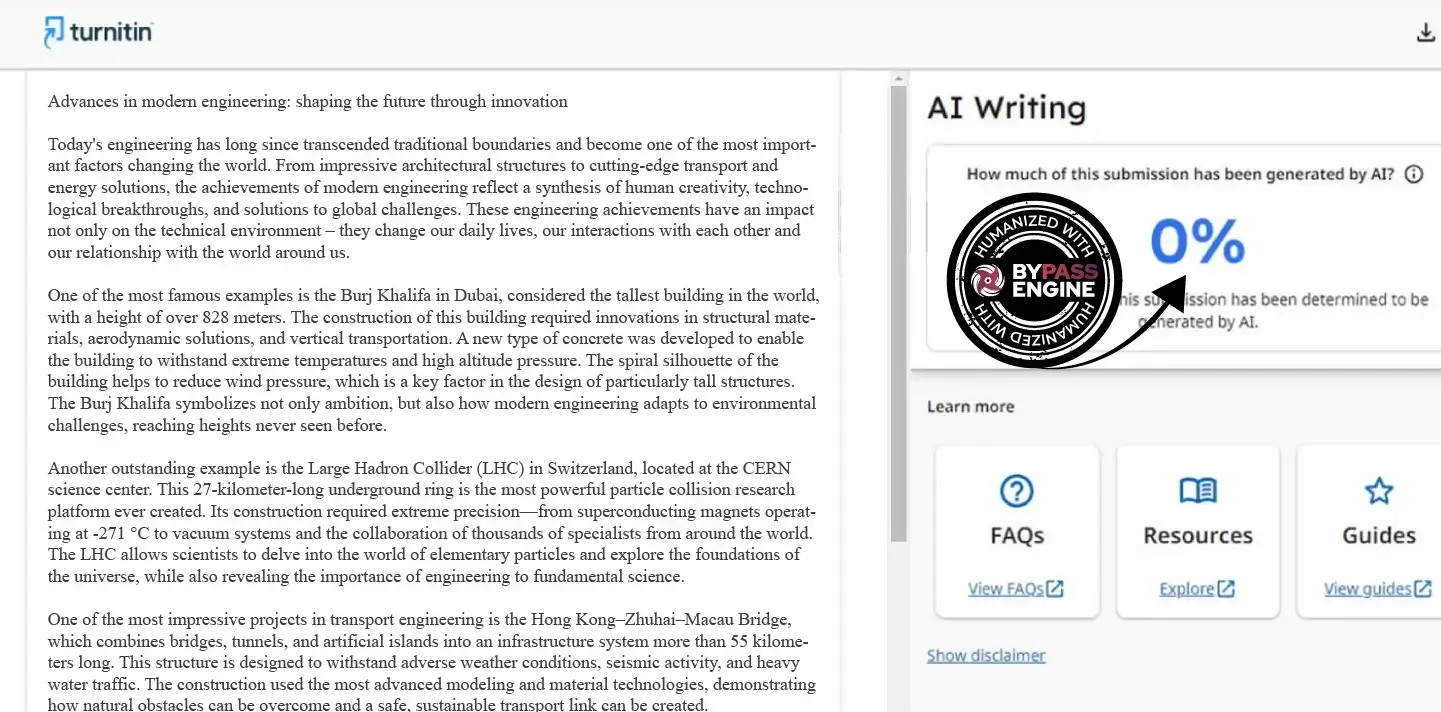
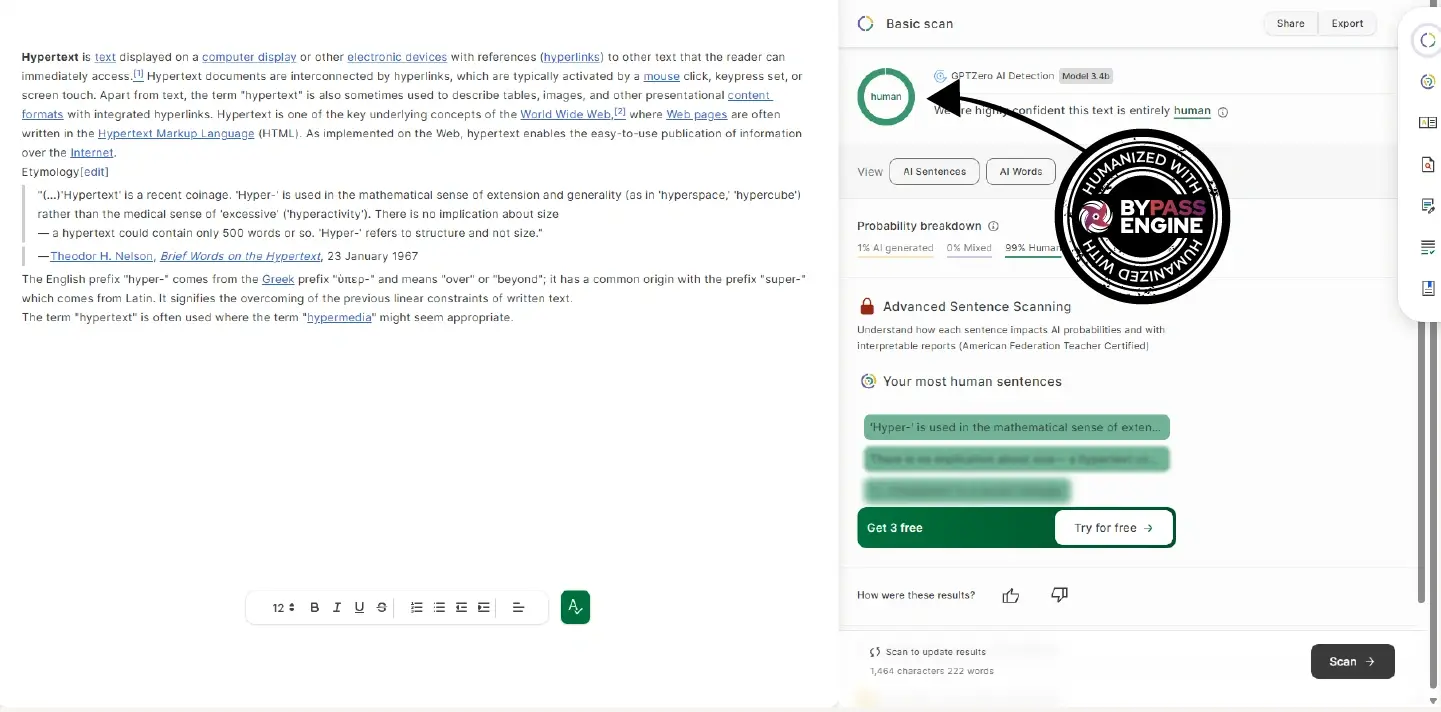
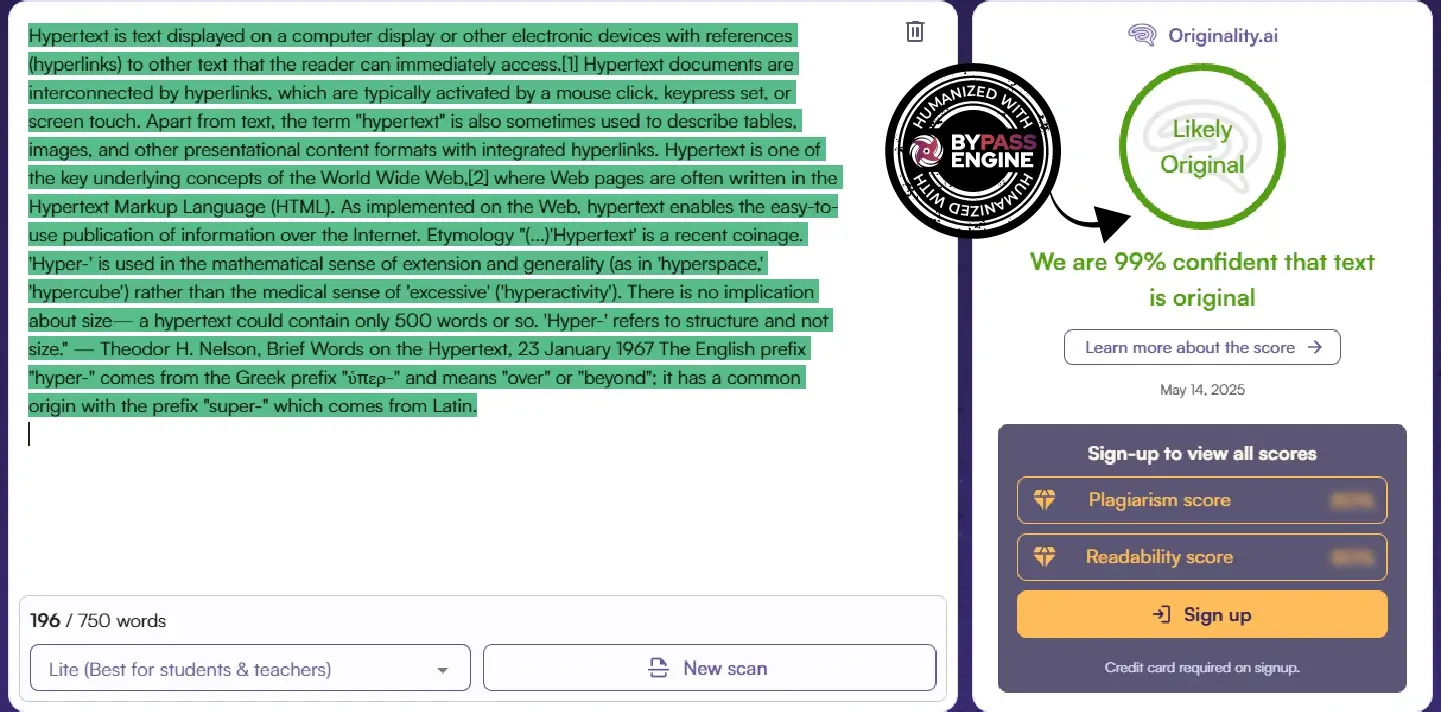
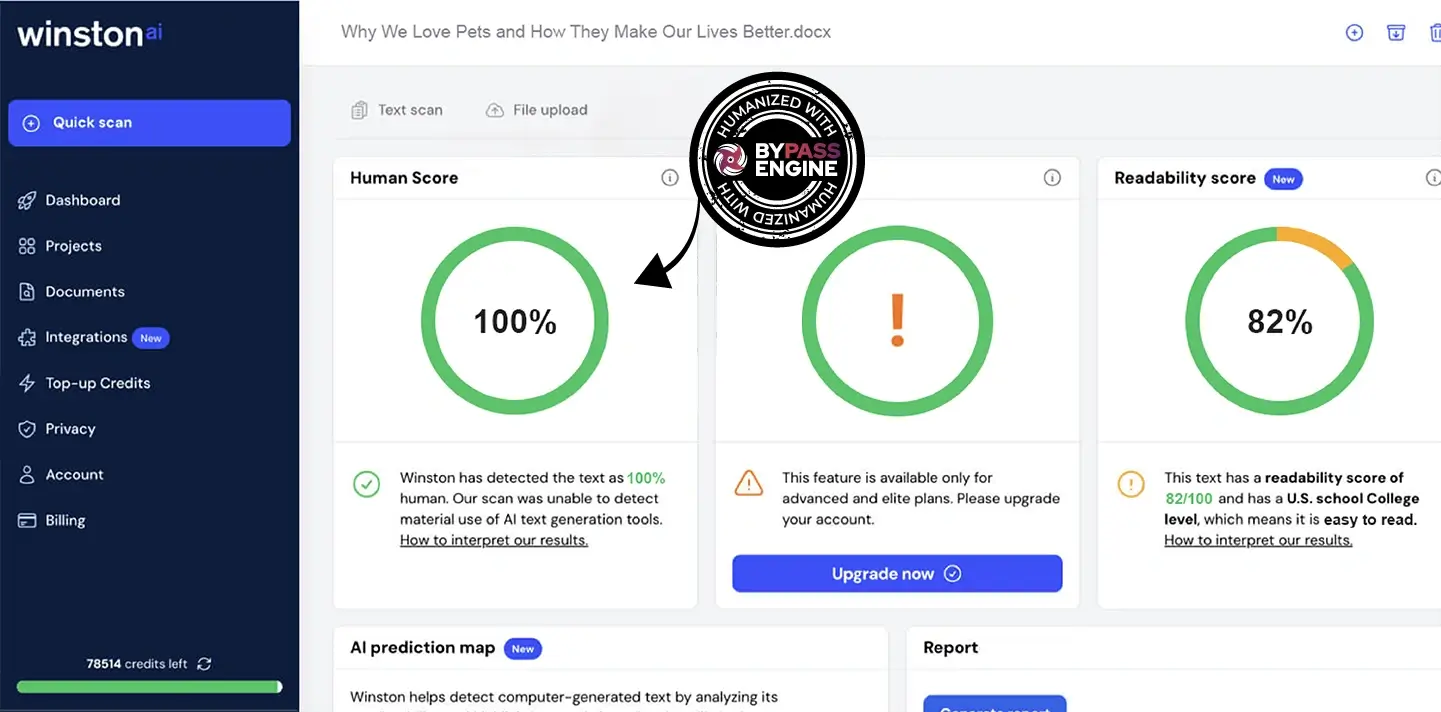
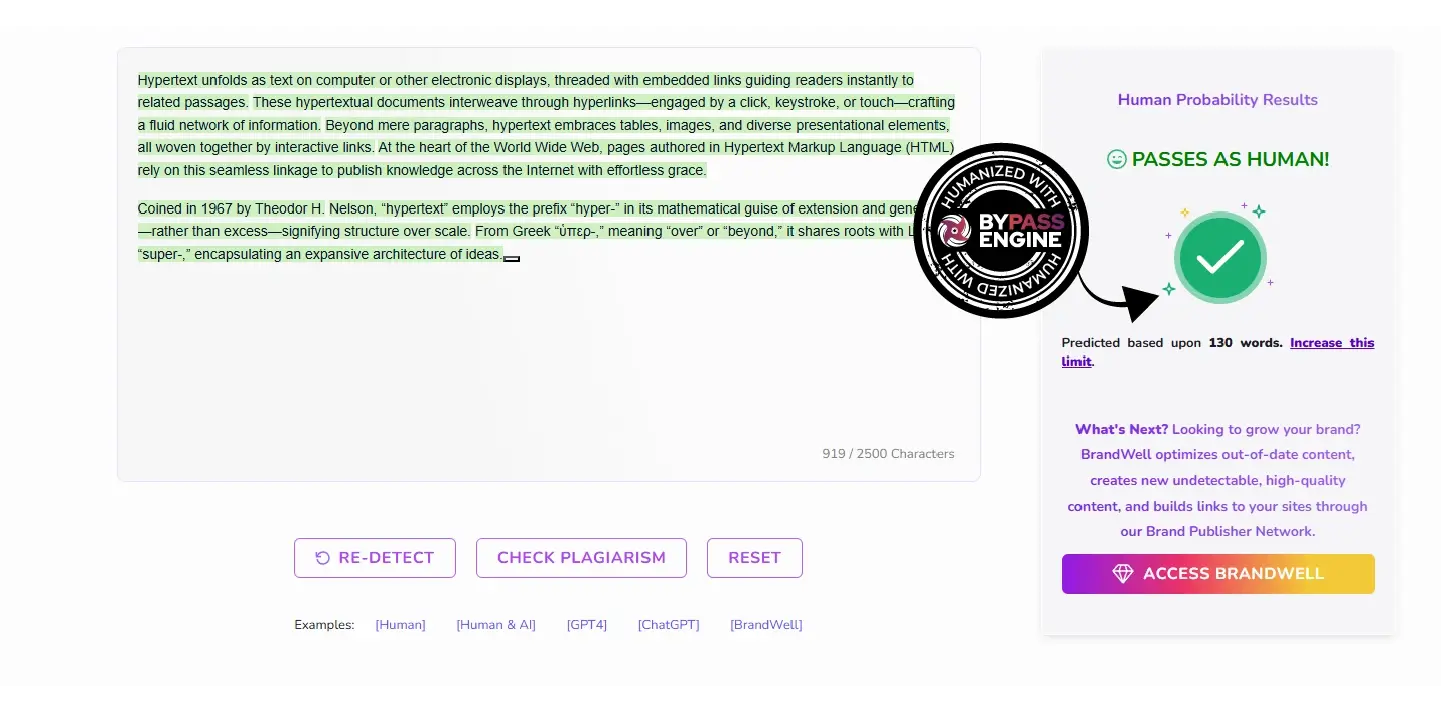
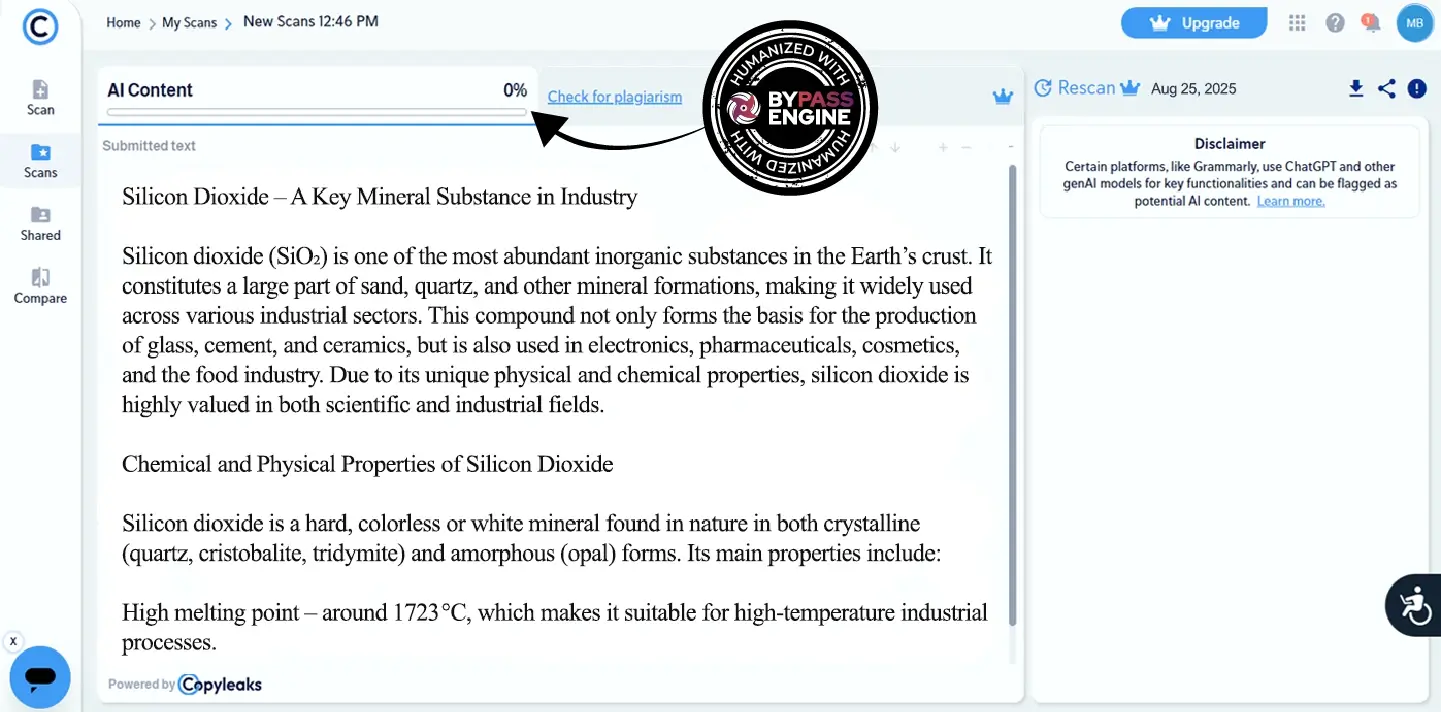
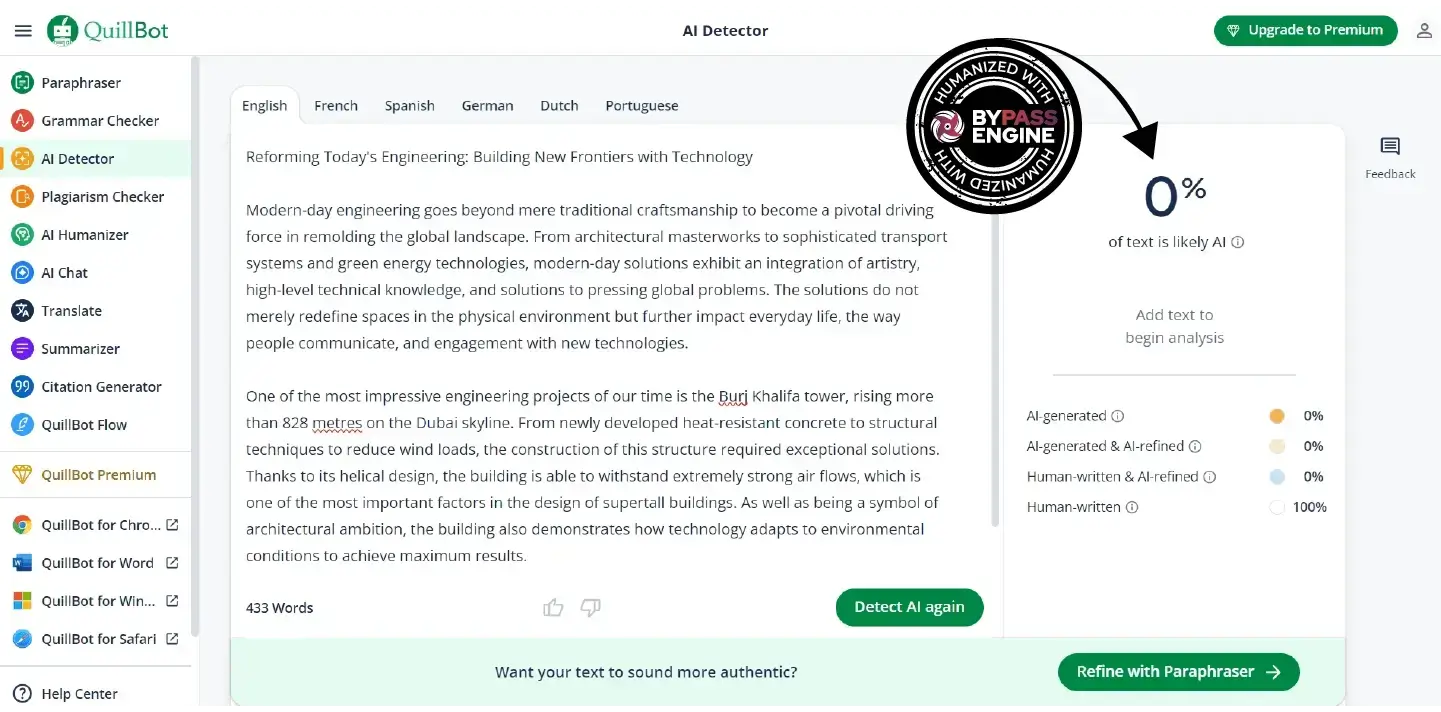
A powerful Smodin AI Humanizer helps keep AI detectors from flagging your text. It changes your words to read as if a human wrote them, not a machine. It analyzes how words fit together and their meanings. This helps the tool determine if something sounds computer generated. Just like Turnitin and Copyleaks detect machine written texts, this Smodin AI Humanizer uses advanced technology too. As detection systems improve, this AI detection remover also advances, helping you stay clear of those detections.


for
students
Polish your own drafts and check them for false AI flags before you hand them in.
for
marketers
Turn AI-assisted drafts into on-brand copy that reads naturally
for
researchers
Test how AI detectors respond to different writing styles
for
copywriters
Transform AI drafts into content that feels written by you
for
developers
Transform AI drafts into content that feels written by you
for
journalists
Convert AI-generated notes into natural, publishable prose
for
authors
Polish AI-generated ideas into narrative-quality writing
for
AI research
Benchmark AI detectors and measure false-positive rates
95% of users content can be flagged with ai if an Alternative to Smodin AI Humanizer is not used
Secure Payment:






Bypass Engine has helped a lot of students and professionals to optimize their workflow, be productive and get the most out of their time while achieving their goals. The videos below are paid partnerships with content creators.
In 2024, making your writing stand out is difficult because many programs check for copied content. You might ask, how can you bypass tools like Turnitin, Copyscape, and Grammarly? AI checkers are becoming better at spotting similar wording, even if you change a few terms. But here is the good news. As these tools improve, so does a reliable Smodin AI Humanizer. We help you stay ahead. We have built a tool to remove AI detection that keeps your message’s core intact. This Smodin AI Humanizer is excellent at avoiding AI detectors and rarely fails. If you want your work to be unique and free from concerns about copying, our AI detection remover is exactly what you need.

AI and tools can spot if writing is truly yours. They compare your past work to see if the new stuff matches or stands out. These tools can even detect if a person didn’t write something by analyzing word use. We understand the need for speed and originality in creating content. That’s why a trusted Netus AI alternative is the solution. Our service tweaks your writing so it reads naturally and sounds like you. This plagiarism-free tool ensures your writing stays original. You can also check your text with the built-in AI detector before you publish. Trust this Netus AI alternative to keep your work safe.
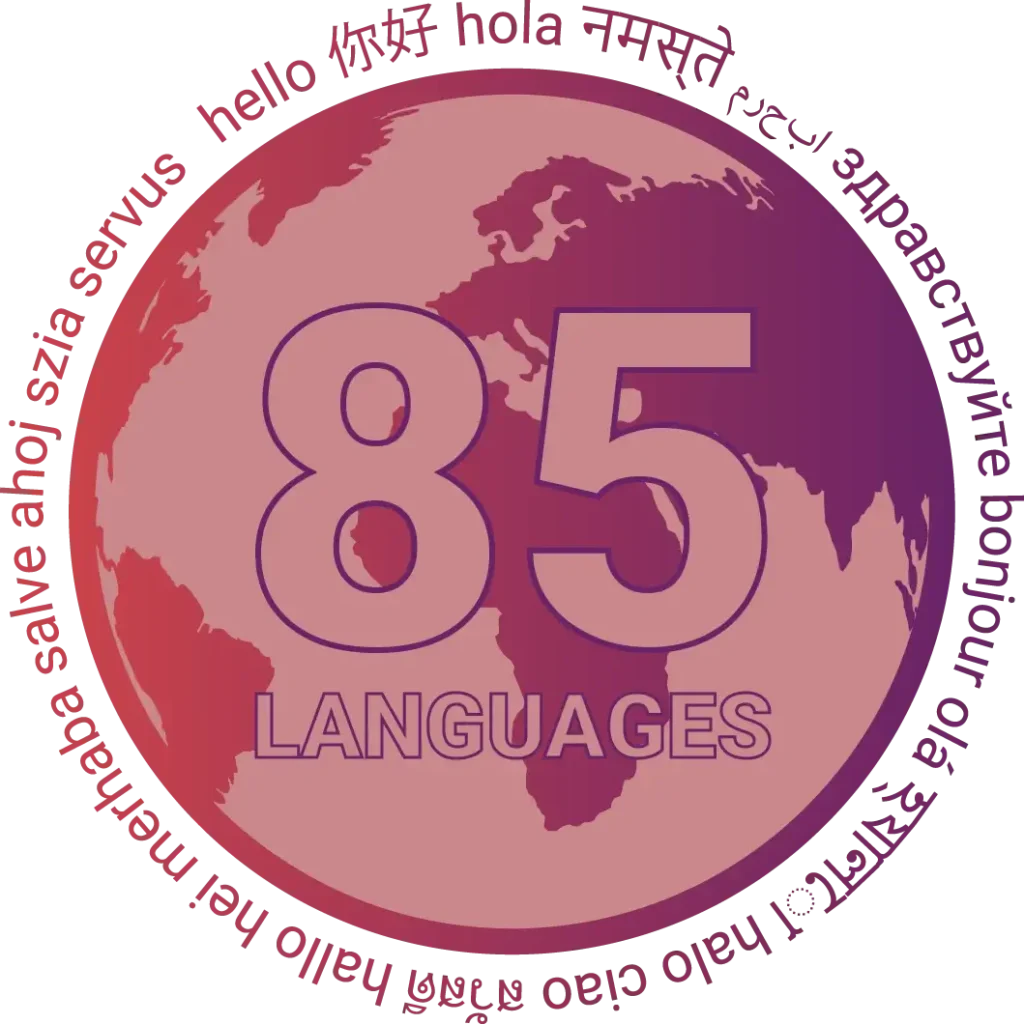
Bypass Engine is a multilingual Netus AI alternative online tool utility that rephrases essays and sentences across languages.
It supports 85 languages, including: Mongolian, Uzbek, Portuguese, Bashkir, Hindi, Kashmiri, Maithili, Romanian, Estonian, Welsh, Urdu, Oriya, Lithuanian, Hungarian, Kannada, Chinese, Pashto, Azerbaijani, Marwari, French, Belarusian, Slovene, Greek, English, Min Nan, Punjabi, Kyrgyz, Chhattisgarhi, Russian, Javanese, Vietnamese, Galician, Croatian, Dogri, Norwegian, Bengali, Armenian, Kazakh, Irish, Slovak, Finnish, Rajasthani, Catalan, Japanese, Serbian, Haryanvi, Awadhi, Santali, Danish, Faroese, Konkani, Bhojpuri, Brazilian Portuguese, German, Indonesian, Albanian, Montenegrin, Ukrainian, Maltese, Georgian, Malayalam, Macedonian, Arabic, Basque, Persian, Mandarin, Moldovan, Mandarin Chinese, Bosnian, Sinhala, Sindhi, Italian, Latvian, Sanskrit, Dutch, Korean, Czech, Malaysian and many more.
The Smodin AI Humanizer is a tool. It rewrites AI generated text. It avoids being detected by AI checkers. It changes sentences. It adjusts phrasing. It adds a human feel. This helps your content blend well with human writing. You stay undetected while your message remains the same.
Just paste your AI generated text into the tool. It will change the wording to sound more human, with varied sentence styles and a natural feel. This lowers the risk of being caught by detection tools, which is important in schools, work, or when publishing, where authenticity matters.
Yes, it can. This tool helps rewrite text in different languages. It makes content sound natural and human like in English, Spanish, French, and more. Performance might vary slightly with each language, but the Smodin AI Humanizer works to avoid detection for many audiences.
The Smodin AI Humanizer works well to smooth out the repetitive patterns typical of AI writing. It intelligently changes text to lower the chance of being flagged as AI generated. While it is not perfect, it greatly helps keep your content unnoticed if used wisely.
Yes, if systems flag your content, the Smodin AI Humanizer can help. It changes the words and structure to seem more human. It smooths out robotic language and adds a natural flow. This transformation helps the content slip past most AI detection tools and appear more genuine.
Yes, it can. The tool not only makes text sound more natural but also improves clarity and flow. It simplifies complex words, makes ideas connect better, and ensures your message reads easily. This dual benefit helps refine content and keeps it hidden from AI detection systems.
The Smodin AI Humanizer uses context to change text without losing meaning. It analyzes sentence structure and word meaning, then intelligently rewords to preserve the intent. This way, your main message stays the same, just expressed in a more natural and less detectable way.
Yes, it can. The tool changes sentences, tone, and flow to sound more natural. It removes robotic phrases and adds subtle style variations that mimic real writing. This makes the text feel more authentic to readers and less likely to be flagged by AI detection.
Not exactly. Using the Smodin AI Humanizer to rewrite AI text is not plagiarism, since you are not copying someone else’s work. However, some schools or publishers have rules about AI use. The tool helps you follow those rules by improving how your own content reads; it does not replace proper citation.
Yes, you can legally use the tool to change or improve your content. But just because something is legal does not mean it is always right. Some institutions or employers might not allow AI generated content. You can use the Smodin AI Humanizer to stay undetected if it fits the rules where you are.
Yes, it is generally fine to use the Smodin AI Humanizer on your own writing. These tools help refine and improve content you have created. However, you should check your school’s rules or job guidelines first. Some places have specific policies about AI use. When allowed, these tools simply help your writing flow better and read more naturally.
Tech is changing fast. It is important to keep AI work safe and authentic. We are focused on making sure our chat rewording tool is top notch. Our Smodin AI Humanizer hides where its words come from by changing word choice and sentence structure, while preserving the meaning. This makes it look like a person wrote it, not a machine. Avoiding checks for copied content, like Turnitin or Copyleaks, can be tough. But with the right Smodin AI Humanizer, we can change ChatGPT's output to avoid AI detection. This way, no one can tell the text was made by AI. We built this software to help bypass AI content checks, so you can write with AI and stay undetected. With this Smodin AI Humanizer, you can avoid any check and remain hidden.
AI writing tools: a key to your personal and professional growth
Nowadays, AI writes a lot of the stuff we read, and it is key that it feels like a real person wrote it. Tools like ChatGPT can whip up articles quickly. But many of these pieces can be flagged by special programs that spot AI written content. This might make readers doubt the content’s authenticity. That is where a Smodin AI Humanizer comes in. Think of it as a magic wand for writing. It can tweak AI text to sound human. This means using clear, fun, and easy to understand language. It is like having a friend who knows how to make your words sound more human. It is not just about swapping words or shuffling sentences. It is capturing how we naturally chat with each other. We want AI made content to not just sound human but feel human too. Curious to learn more? Sign up to see how this Smodin AI Humanizer can make your AI content friendlier, like chatting with a pal!
The Rise of AI Content Detection
In recent years, the digital landscape has transformed dramatically, with AI systems playing an increasingly pivotal role in content creation. From generating text to recognizing images, AI has become a cornerstone of technological innovation. However, as AI’s capabilities expand, so too does its ability to detect AI generated content. This has given rise to a new quandary: how to sidestep these detection systems. Enter the world of tools like a Smodin AI Humanizer. These tools aim to blend AI generated text seamlessly into the human written tapestry, circumventing detection algorithms. But why is there such a need for these tools, and how do they work? To embark on this exploration, we must first understand the motivations behind this fascinating digital dance.
How AI Content Detection Removers Operate
Tools like a Smodin AI Humanizer operate much like a skilled editor, one who knows exactly how to tweak words so a draft reads smoothly. These tools employ a variety of techniques, transforming predictable patterns into a tapestry of varied sentence structures and unique word choices. Imagine an artist painting a mural; too many repeated patterns might make it appear mechanical, so a splash of creativity is needed to bring it to life. Similarly, these tools introduce nuances ranging from subtle grammatical quirks to clever analogies that breathe vitality into the text. By doing so, they aim to make the content read naturally rather than mechanically. Many utilize advanced Natural Language Processing (NLP) techniques, analyzing the rhythm and flow of human writing. In a sense, they are the chameleons of the digital world, adapting seamlessly to blend into their surroundings. Yet, like any tool, the effectiveness of a Smodin AI Humanizer hinges on the skill with which they are wielded, a reminder that even in a digital age, a human touch remains invaluable.
The Ethics and Future of AI Content Detection Removers
While tools like a Smodin AI Humanizer offer intriguing solutions for writers, they also prompt a series of ethical questions. Is it right to use AI to mask the origins of content, especially if it could be misleading to readers? This debate mirrors a broader conversation about authenticity and transparency in the digital age. On one hand, writers and creators may see these tools as a means to enhance creativity and work more efficiently. On the other, critics argue that they might undermine the credibility of content and contribute to the blurring of ethical lines. As we peer into the future, the trajectory of AI content detection and tools like a Smodin AI Humanizer will likely be shaped by this ongoing dialogue. The tools may evolve, becoming more sophisticated and widespread, but the fundamental question will remain: how do we balance innovation with integrity? As with many technological advances, the answer lies not solely in the tools themselves, but in how we choose to use them. In navigating this new frontier, perhaps the key is to foster a digital environment where both AI and human creativity can coexist harmoniously.