
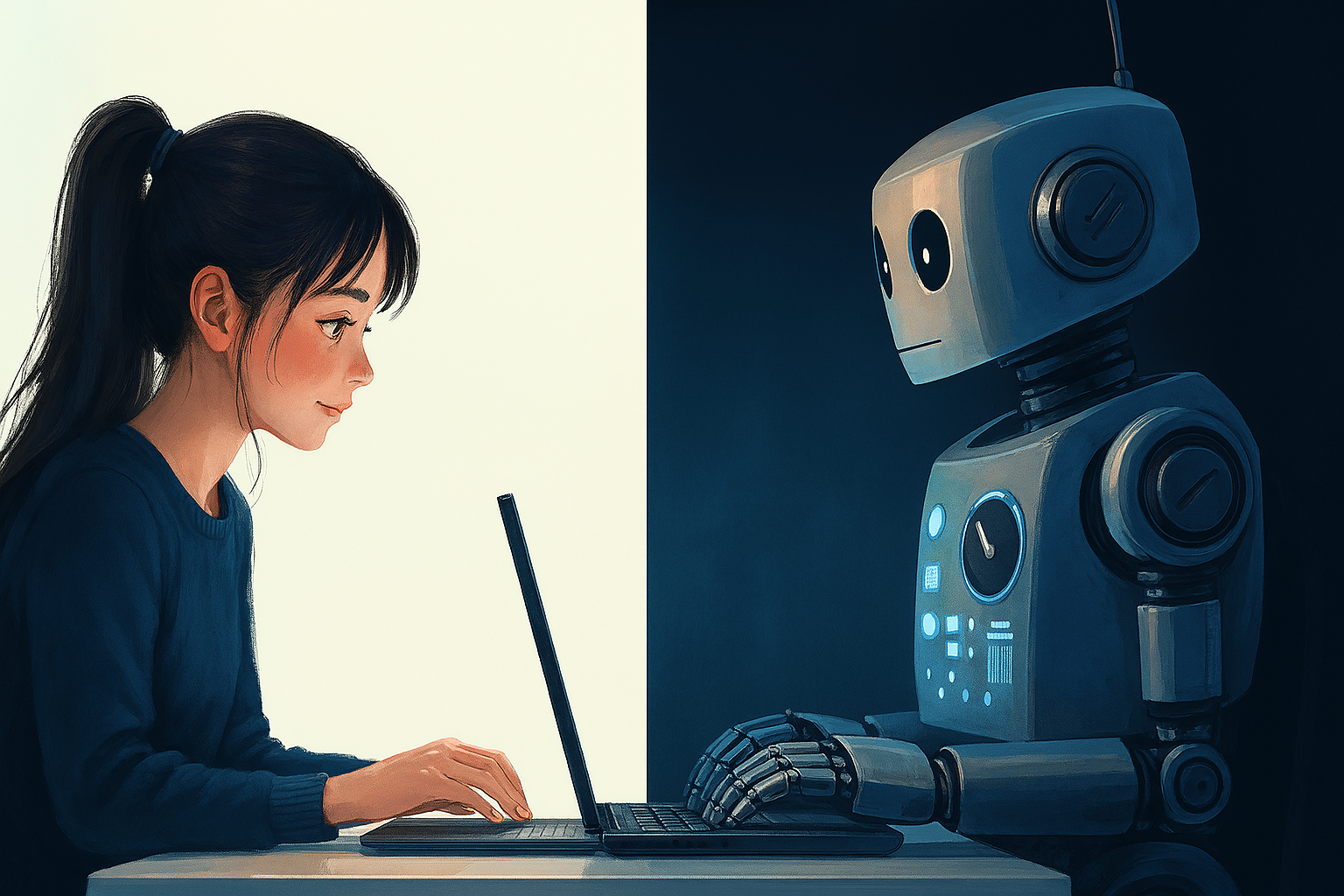
It’s getting tougher to tell AI writing apart from human-written text. Humans usually sprinkle more creativity and unpredictability into their writing, which makes it special. Here are some tips to spot the differences and what this could mean for the future.
It’s amazing to see how the tech world has shifted in a few years. You can even have ChatGPT create an intro for an article like this now.
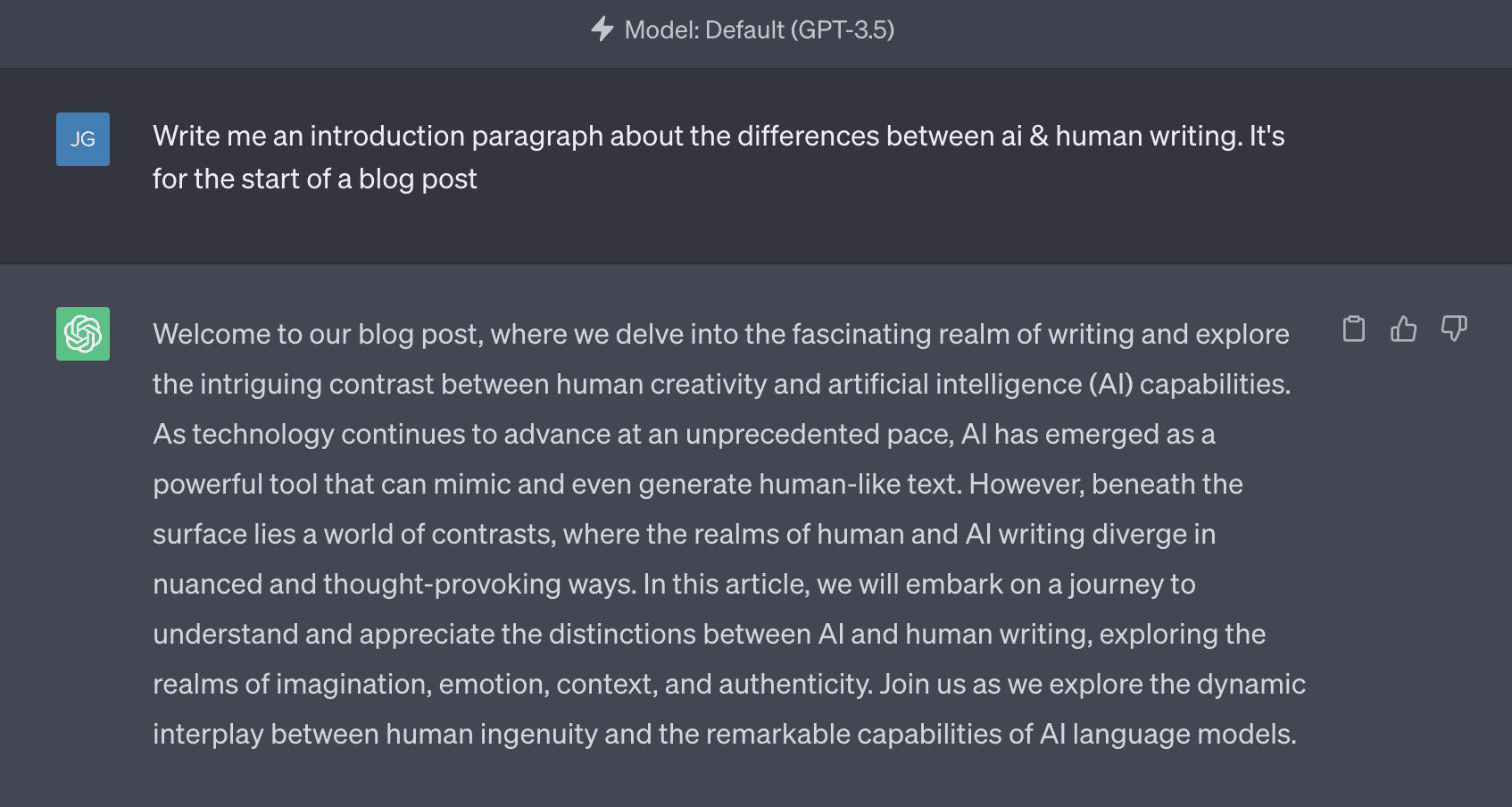
It’s not flawless, but I could adjust it if I wanted to. The most exciting (or troubling, depending on perspective) part is that this technology is just going to improve from here on out — as seen with GPT-4o, Claude, and other new models.
Imagine this on a larger scale. People globally are already figuring out how to harness these tools. In fields like education, business, or just for boosting productivity, ChatGPT and similar tools have become widely recognized names.
However, it’s easy to get caught up in the benefits and overlook the costs of technology. AI is causing issues in the academic world with AI-generated essays and text manipulation software. It might not be long before teachers have to start giving exams on paper again, right?
For educators, parents, or anyone trying to make sense of what’s happening and what the future holds, it’s crucial to understand the difference between AI-generated and human-written content to encourage responsible information consumption.
While there’s no foolproof method to detect AI writing, there are a few steps you can take until these generative models become so advanced that distinguishing them becomes impossible.
What Even Is AI Writing?
AI writing is when algorithms create text after being trained on lots of human-written material. These algorithms, also known as language models, rely on statistical techniques to produce text that makes sense and is grammatically correct.
Some major tools in this space now, aside from ChatGPT, include Jasper and WriteSonic. Even Grammarly and QuillBot use AI to rephrase what you write. These apps allow you to give a prompt, add a few instructions, and then they can generate full essays and articles for you.
While some have been around for a while, ChatGPT showed us their potential. It’s detailed, creative, and mostly accurate — almost everything we want from AI. Sure, there are occasional AI errors, but who’s really keeping track?
Looking further into AI writing, tools like WriteHuman and Undetectable AI can rearrange words to avoid AI detection. They work to make writing appear more human by changing the expected patterns of your input.
Aside from these writing tools and rearrangers, there are many syntactical differences between AI and human writing. This includes features like:
- Writing created by AI often repeats itself.
- Words like “delve” and “utilize” often show up in AI writing more than in human writing.
- Large language models often prefer organizing information in lists instead of paragraphs.
Remember, these things don’t actually feel emotions yet; they just act like they do for now.
When I’m creating something with ChatGPT, I can usually spot it right away. The writing is quite good but carries a bit of a robotic vibe. Here are a few differences I think exist between AI and human writing:
Key Differences Between AI and Human Writing
1. Creativity and Originality
- Human Writing: When people write, they usually add creativity and feelings to their work. A writer thinks in a creative way, using their life experiences and imagination. It’s hard to know what a talented writer will say next in their tale. The story creates a clear image in your mind.
- AI Writing: AI, unlike humans, doesn’t have awareness or personal experiences. It writes by using patterns from the data it learned. While it can seem creative, it doesn’t truly create. If asked to review a new TV, AI wouldn’t really know how to. It would just say what it thinks you want to hear.
2. Context and Nuance
- Human Writing: Humans naturally grasp complex context and cultural hints. We sense feelings and hidden meanings in words. That’s why the best writing feels “magical.” Skilled writers use context that readers might not think of on their own.
- AI Writing: AI often has trouble understanding context, especially when it comes to subtleties or cultural references. While it can create sentences that are grammatically correct, it may miss the underlying meaning or emotion. You can compare LLMs to the autofill feature on your phone — it’s a simplification, but it reflects what AI is at this moment.
3. Ethical and Moral Considerations
- Human Writing: Writers think about how their words affect society and the morals behind them. Though not all journalists do this, many people can align their writing with their values.
- AI Writing: AI lacks morals and ethics. It can’t make value judgments. Sometimes, it creates content that’s insensitive or inappropriate, and the algorithm doesn’t notice. Algorithmic bias is a big issue and will take many years to solve.
4. Evolution and Learning
- Human Writing: Writers change and get better with time. They take in feedback, tweak their style, and find their own voice. This is why we connect with writers, brands, and influencers. We are drawn to their identity, ideas, and genuine views.
- AI Writing: AI models get updates and learn from new data, but they don’t change like humans do. Their learning depends on the data they receive, and they don’t experience personal growth with today’s technology. We are far from creating something like Skynet, everyone.
5. Error Handling
- Human Writing: People sometimes slip up because they miss details or don’t know enough. But they have the ability to see their mistakes and fix them by looking at the bigger picture. It’s not always clear when someone is sharing wrong info, but if their writing seems unsure or unreliable, that’s a big warning sign.
- AI Writing: AI systems can sometimes make mistakes that appear believable. They don’t truly understand, so they might confidently provide wrong or illogical answers. Try asking ChatGPT something you know it can’t answer. It might just make things up, saying what it thinks you want to hear.
Implications for Education and Parenting
Grasping these differences is key to nurturing future students and journalists.
AI content itself isn’t negative, but without ethical guidelines, it can lead to problems. If students rely on AI for college tasks, what will become of the next generation?
Key considerations:
- Critical Thinking: Encourage kids to think about what they read. Can they trust the info? Does it consider what’s right and wrong?
- Digital Literacy: Learn how to tell if content is from AI or a person. Look for odd context or meaning gaps; these might show AI wrote it.
- Encouraging Creativity: Highlight how crucial creativity, ethics, and personal voice are in writing. These distinctly human qualities differentiate us from machines.
The Road Ahead
It’s inevitable. AI writing models will keep improving. As they do, the difference between human and machine-generated text will become harder to spot. We might reach a point where we can’t tell the difference at all. This won’t be as simple as detecting plagiarism, where you can trace back to the source.
We need a new way to handle these changes. Imagine seeing something online that seems like it was made by AI, but you can’t prove it. That’s the challenge scientists face now: creating a method to tell human writing from AI.
By encouraging critical thinking, digital literacy, and creativity, we can help future generations manage this changing world wisely and ethically.
Remember, AI-generated text is a tool, it’s powerful and helpful, but it lacks the human touch. Let’s include ethics to keep our society on a moral path.