
Let’s see what are Large Language Models and what they really mean. Also, learn how spotting AI can keep things clear as more AI-made stuff shows up.

Many people find big words about smart computers tricky. They’re everywhere now.
But when we hear things like “talking tech,” “learning machines,” and “smart search stuff,” it sounds new and confusing.
People who like AI talk about large language models.
Websites and apps say they use them to help us, but they don’t explain what they are. So, in this piece, we’ll look closer at these large language models to help you understand smart computers better.
Pressed for time? Here’s the scoop:
1. Big computer programs, called large language models, gather lots of info. They use it to answer people’s questions.
2. ChatGPT is a popular example of these big programs that many use.
3. Bypass Engine has a great tool to spot AI-made stuff. This tool helps keep things clear and honest online.
What Are Large Language Models (LLM)?
Let’s dive in. What is a large language model, or LLM?
Amazon Web Services says these are big deep-learning models. They learn from lots of data before use.
They have parts called an encoder and decoder.
These help understand texts and how words connect. This can seem tricky.
Here’s an easy example.
Words look the same, so language models need lots of training and data.
This helps them know what you mean with those words.
For example, if you ask ChatGPT, “give me the top 10 places to find a bass,”
it must decide if you mean fishing spots or places to buy instruments.
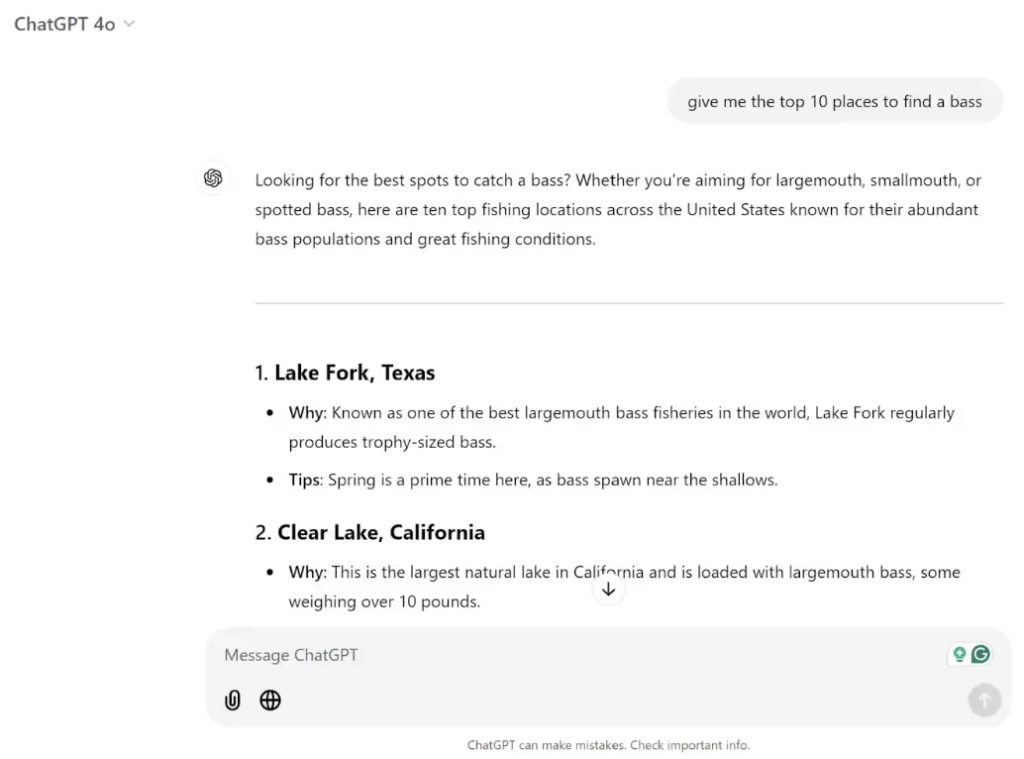
Sure, this example is a bit extreme, and other examples are less clear. But it shows how the process works.
The large language model sees the request, searches its big collection of data, and finds out what question you’re asking.
Is ChatGPT a big language model?

Yes, it is. People often ask this. ChatGPT is well-known for being one.
It has lots of data and training. It answers questions from users as best as it can.
ChatGPT knows things up to a point.
It has a limit on what it knows. This is due to its knowledge cutoff date.
So, ChatGPT might not know the latest info because it hasn’t learned it yet.
When ChatGPT first came out, its knowledge stopped in September 2021. This was noted by the Poynter Institute.
Now, the newest version, GPT-4, knows things up to October 2023. OpenAI shared this.
Spotting AI-Made Texts
Many people ask: How do we know if AI helped make texts?
Though some think they can see AI-written texts, studies show it’s hard. So, we use tools to spot AI texts.
A tool named Bypass Engine is great at finding AI-made texts.
Editors use this tool to keep their articles clear.
This helps content creators, website runners, and editors.
Large Language Models: What’s Their Purpose?
Big language models, or LLMs, need a lot of effort to train. They’re designed to understand and write text like humans. Here’s a simple look at how we get these AI systems ready:
1. Collecting Text: First, we gather a ton of text from places like books, articles, websites, and chat forums. This data needs to be wide-ranging and diverse so the model can learn lots of language patterns and meanings.
2. Tidying Data: We clean data before the model sees it. This involves removing duplicates, correcting errors, and keeping the text format consistent. We also remove sensitive or biased content to prevent harmful outputs from the model.
3. Building the Model: Large language models use networks called transformers. These networks help the model understand how words fit together. Encoders and decoders help the model grasp both context and meaning.
4. Training the model: The model guesses the next word after seeing the words before. It improves by trying many times, adjusting itself to become more accurate. This needs a lot of computer power.
5. Fine-Tuning: After basic training, models get more specific. They use special datasets for tasks like customer service chats, legal document summaries, or health talks.
6. We check models carefully. We want the answers to make sense. They need to fit the context and be correct. If needed, developers will make the model better based on the results.
7. After models go live, we watch their performance. Developers tweak them to fix issues, manage biases, and improve responses based on real-world use.
Language Models: More Than Just Chatbots!
We hear about chatbots with big language models. But these AIs do more. They’re changing jobs in many fields by doing tasks, helping decisions, and making things personal. Let’s see how they work beyond chat:
Health:
Doctors Help: Language models look at symptoms and suggest treatments.
Quick Research: Scientists use them to sum up medical studies fast.
Money Matters:
Customer Help Desk: Banks use models to help customers with account or transaction issues.
Spotting Frauds: AI checks financial data for unusual activity that might mean fraud.
Education Corner:
Learning Tailored to You: Language models create a learning path that fits the student’s pace.
Teachers’ Helper: AI aids teachers by making quizzes, summaries, and lesson plans.
Law and Compliance:
Contract Check: Models automate contract reviews, finding key clauses and risks.
Staying Legally Tuned In: Businesses use AI to stay updated with law changes, reducing compliance risks.
Content and Media:
Automated Authors: Writers use language models for blog posts, social media, and scripts.
Language Wizards: AI translation tools help communicate across languages globally.
Customer Service and Experience:
Help at Hand: Businesses use AI virtual assistants for 24/7 customer support.
Tailored to Your Taste: Platforms use AI to improve experience with personalized suggestions.
As these models improve, their uses grow. They reshape industries by easing tasks, aiding decisions, and driving innovation.
Why Knowing LLMs is Important
AI is everywhere now. Knowing how big language models work helps us use them better. They can do many things like automate tasks and make content. This opens new doors for people and businesses. But they also have limits. They might be biased or use old info, so we need to be careful. Understanding how LLMs work helps us talk better with developers and users. This makes sure AI fits real needs. It helps leaders make smart choices about using AI, pushing new ideas while being ethical. Knowing these basics also helps spot when AI content is wrong, promoting smart and safe AI use.
Questions People Often Ask About Large Language Models
Can big AI systems get things right?
How well big AI systems work can change based on the task, the questions, and their learning history, a thing to watch with smart AI systems is they might make stuff up, this happens when the AI thinks something is true, but it’s not. So, double-checking what they say is super important.
Do big AI systems have biases?
Yes, big AI systems learn from lots of information, and if that info has biases, the AI might show those biases too. Making sure AI is used right and fairly is becoming a bigger deal for AI makers.