
Writing well in academics matters a lot. Be it a research paper, thesis, or dissertation, how you present your ideas impacts their reception. These days, many tools can help make writing better, and Grammarly stands out as a favorite. But, does it really help with academic work? Let’s explore this.
Understanding Grammarly
Before deciding if it’s good for academic writing, you need to know what Grammarly does. Grammarly is an online tool that helps you write better. It checks for grammar, punctuation, style, and plagiarism mistakes. You can use it on a website editor, browser extensions, and in programs like Microsoft Word and Google Docs.
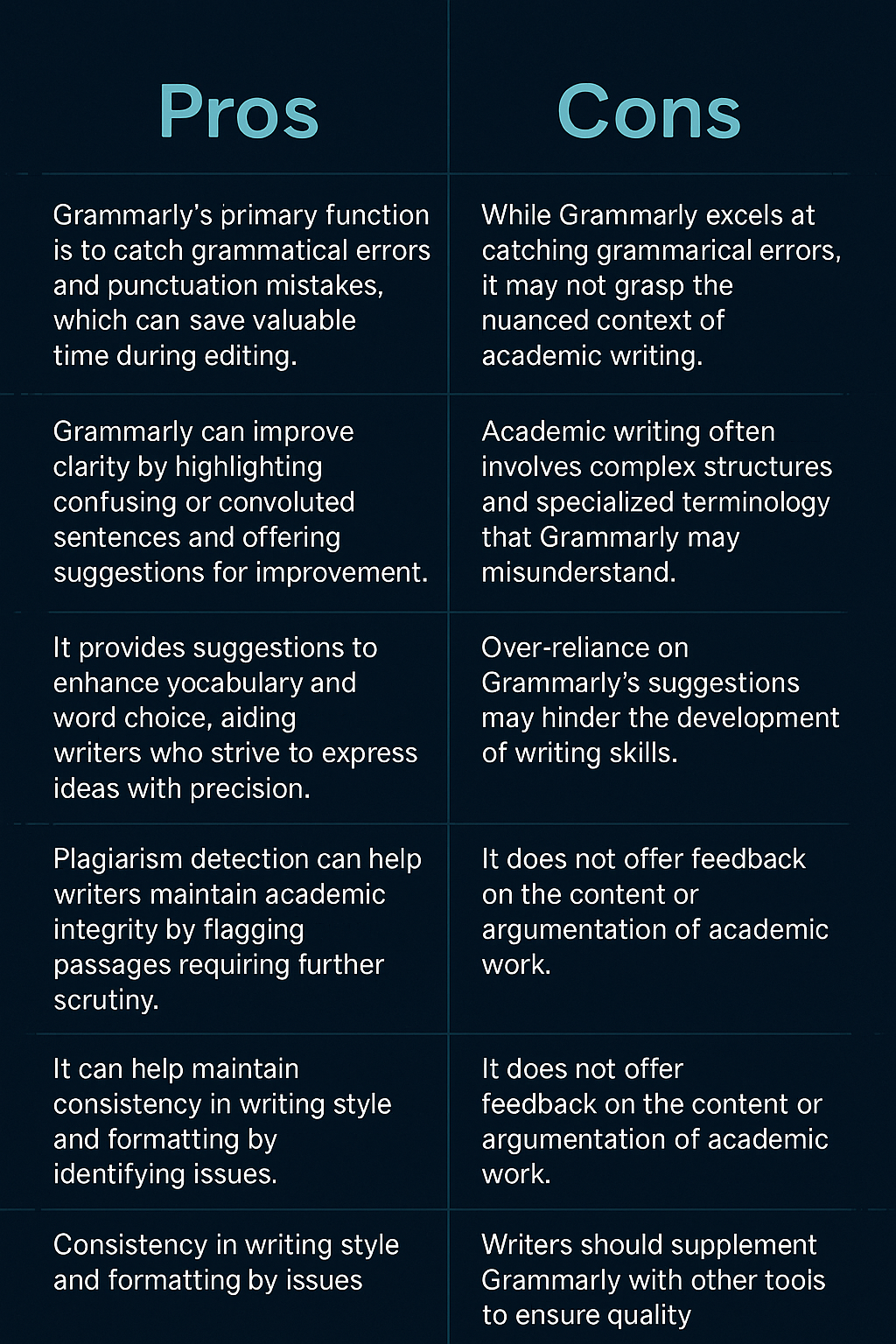
The Pros and Cons of Grammarly for Academic Writing
Tips and Considerations
- Customize Grammarly Settings: Adjust Grammarly’s settings for academic writing by tweaking tone, formality, and style preferences. This helps make sure the suggestions match what scholarly writing needs.
- Review Suggestions Carefully: Grammarly gives useful tips, but not all fixes fit academic writing. Use your judgment to decide on changes, especially with sentence structure, terms, and style.
- Use Feedback Wisely: Grammarly offers explanations for its corrections. Spend some time learning why each suggestion is given and how it makes your writing better. This helps you learn grammar rules and improve your writing skills gradually.
- Proofread Your Work: Grammarly is useful, but it can miss things. Make sure to check your school papers yourself to find mistakes Grammarly might skip.
- Seek Feedback from Peers or Mentors: To improve your writing, get advice from friends, teachers, or mentors who know academic writing. Their feedback can help you improve your ideas and style, not just your grammar.
- Practice Regularly: To get better at academic writing, practice is key. Regular writing tasks can help you get a grip on grammar, expand your word bank, and sharpen how you express yourself.
Conclusion
In the end, Grammarly is helpful for students who write. It checks grammar, punctuation, clarity, words, and plagiarism. But, it isn’t perfect. Writers need to use it wisely and rely on their own skills too. Grammarly should be a tool that helps make writing better. It lets writers share their thoughts clearly and accurately.
Frequently asked questions
- Is Grammarly suitable for academic writing?
Grammarly is really helpful for academic writing. It checks grammar, fixes spelling, suggests punctuation, and improves style. These tools make your academic papers much better.
- Can Grammarly detect plagiarism?
Grammarly’s premium version includes a plagiarism checker that reviews your writing against countless web pages and scholarly articles to find any possible plagiarism. This tool is especially helpful for academic writers to confirm their work is unique and correctly referenced.
- Does Grammarly work with academic citation styles like APA or MLA?
Grammarly won’t format your citations in APA or MLA styles, but it can spot mistakes and inconsistencies in them. You can use Grammarly’s feedback to fix your citations yourself.
- Is Grammarly accurate for complex academic terminology and jargon?
Grammarly has a large collection of words and phrases, even some tough academic ones. But, how well it works can change based on how unique or specific the words are. People can tweak their dictionaries and add special terms to make Grammarly better for academic writing.