
Higher education is changing rapidly – and not always in the way one might expect. With the advent of tools like ChatGPT, students and teachers have had to rethink what counts as “original work.” As a result, a number of apps and platforms have emerged that promise to “humanize” AI-powered writing. Grubby AI is one of the most debated Google searches, such as “Can Grubby AI bypass Turnitin?” or “AI humanizer for academic work.” It’s easy to see the appeal: write with AI, then run the text through another service and, at least in theory, you’ll avoid plagiarism checkers.
But will these programs deliver on their promises? And even if they cheat the software, what’s at stake for the students trying?
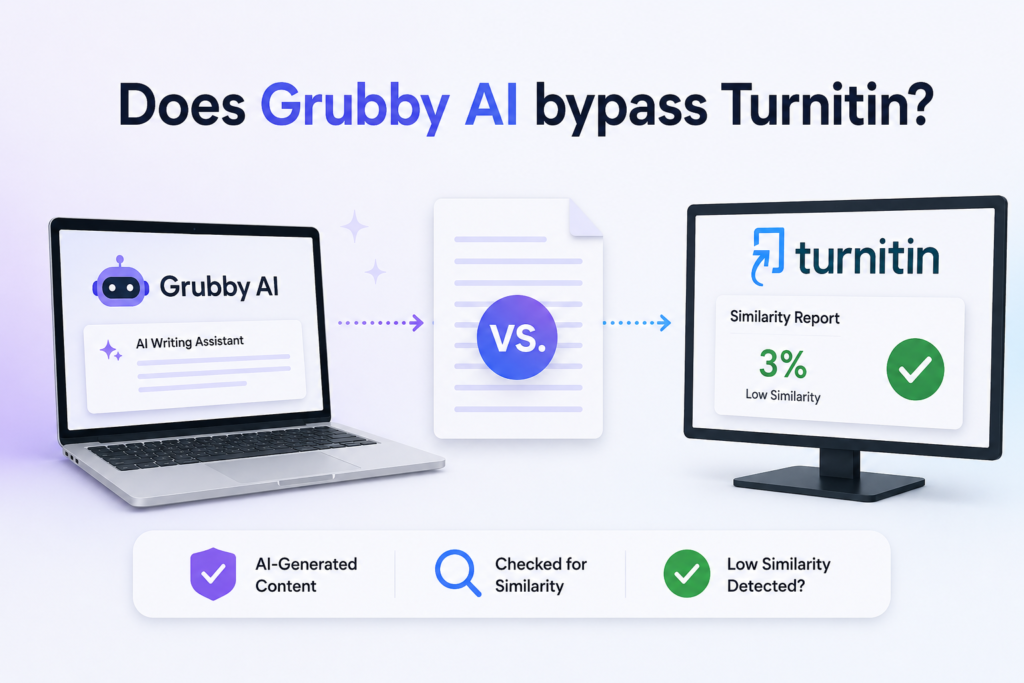
Let’s go back to see what’s really going on. Turnitin and other plagiarism checkers no longer only look for word combinations. Last year, they released tools that look for patterns, or signals, in machine-written text. They might notice unnaturally uniform sentence lengths, how often certain combinations of words appear, or unusual grammatical features inherent in AI writing. They even note that the writing is more fluid or quirky than what most people produce naturally.
So what does Grubby AI or similar “humanizer” software do? In many cases, these tools mix words, correct phrases, change synonyms, and sometimes break up long sentences. The idea is to disrupt the patterns that Turnitin (and similar programs) look for. Sometimes these programs have small errors or strange phrasing, so a “rougher” or more inconsistent style will appear more human. The result can be… well, a mess: the writing may not look like a machine, but it also doesn’t sound like anyone you know.
There is a catch. As Turnitin’s systems learn and update, they don’t just look for classic AI messages. They’re also beginning to notice the fingerprints of “humanizing” software—awkward changes in voice, mismatched tone, inverted grammar, or the odd mix of formal and casual words. Some teachers say they can spot such “washed out” writing even without software, just by how it reads.
But the bigger risk is what happens if someone finds out you used a tool like Grubby AI to avoid detection. In addition to academic penalties (including failing grades or worse), there is damage to a student’s reputation and loss of confidence that can haunt them for the rest of their college life.
After all, the idea of ”outsmarting the detector” is probably a losing game. Detection software will continue to improve. As it does, it will become harder and harder to sneak typewritten work past the gatekeepers. For students, this means that the safest way forward is still learning to write in their own words, using technology as a guide or facilitator, not as a crutch or shortcut. And from what we can see right now, relying on “human” tools to cover your tracks can be more trouble than it’s worth.
The Evolution of Plagiarism Detection: From Text Matching to AI Forensics
If you want to see if a tool really slips past Turnitin’s AI checker, you first need to know what Turnitin actually does when it “checks” for AI writing. In the past, checking for duplicate work was easy. The program looked for exact matches between the student’s work and existing subjects – articles, websites, past work. If several sentences were almost identical, they would be flagged.

AI writing changed everything. A speech model like ChatGPT creates new text from scratch every time, so the words probably won’t match anything Turnitin has in its old database. To address this, Turnitin has revamped its approach. Now, instead of just looking for copied text, their AI checker looks for signs of machine-written language. Last year, Turnitin’s newer system said it could spot writing that looked like it was knocked out by an AI rather than a human.
So how does it work? Not searching for all paragraphs that match other sources. Instead, the tool examines how predictable each part of your writing is. It assigns scores to each segment, evaluating things like average sentence structure, word choice, and patterns that typically appear when a machine writes instead of a human. These clues add up to a score that tells Turnitin if a piece looks suspicious.
Knowing how the detector works is critical if you’re thinking about tools that claim to rewrite or “humanize” AI typing. Anyone who offers a perfect detour is probably overselling it – it’s not as simple as changing synonyms or correcting grammar. You need to understand what makes machine-generated text stand out, or you risk getting flagged anyway.
What is Grubby AI? The Mechanics of a Humanizer
Grubby AI is one of those tools that you can find as a “text humanizer” or designed to fool AI testers. The way it works isn’t magical: it doesn’t start from scratch and write something new like chatbots do. Instead, it takes the response already written by the language model and performs additional steps. The whole idea is to scramble the text enough to trigger AI detectors like Turnitin and make sense to real people.
Under the hood, these tools are usually confused with word choice, sentence structure, or even the order of information. They try to make the meaning clear to everyone reading, but introduce quirks or changes that make the patterns AI detectors look for more difficult to spot. The details of the process—the code used and the fixes—are kept secret, but the general method is based on a series of small changes that disable detection systems without rendering the text unreadable or meaningless to a human.
Common Adversarial Techniques Used to Attempt a Turnitin Bypass
1. Disorder with sentence structure:
Grubby AI messes up how sentences are constructed. Instead of the usual “subject does something to contradict” flow like most robotic or formal writing, it chops up long sentences into awkward chunks or joins two short sentences together in odd ways. Sometimes a sentence will sound a little off – that’s on purpose. Instead of being nice and smooth, the rhythm gets messed up, much like when someone gets tired or rushes the words rudely.
2. Replacing words with odd ones:
It also replaces common words with unusual ones, but not always in the way you’d expect. So instead of “important” you might see “tags” or even something wrong like “large”. Sometimes it makes the sentence sound a little weird or even off-topic, but some detectors decide like, “Hey, it’s got to be a real person, not a robot.”
3. Target Planting Errors:
Here’s where things get a little murky. Some “humanizing” tools add typos, misuse words that sound similar (like “their” instead of “there”), or skip punctuation to make it look like the first draft of a student in a hurry. The idea is that if Turnitin or an AI detector sees messy writing, it can think, “A robot can’t mess up like that, it must be a student.”
4. Spelling is odd by purpose:
The system increases the randomness when retelling items. Technology is essentially rolling the dice on which words to use, rather than choosing safe, common ones. This means you can see odd combinations of words or creative expressions that normal AI would avoid, making the text feel more unpredictable (this also happens when people try to paraphrase without thinking too much).
All of this works together to trip up Turnitin, making the text look and sound messier – not like the computer spewed it out, but rather like someone woke up too late, drank some caffeine, and opened their eyes to hit submit.
Can Grubby AI Bypass Turnitin? The Empirical Reality
Short answer: No, you can’t really expect a Grubby AI (or something similar) to consistently slip past Turnitin, at least not for long.
Here’s why: Tools like Turnitin are constantly being updated to find new writing tricks, and AI detectors are getting smarter. Grubby AI may fool the verifier once or briefly, but there is no guarantee that it will work next week or even tomorrow. It’s like trying to sneak past a guard who is constantly learning your moves. What fooled them before may not work next time.
Also, even if the AI manages to avoid detection at first, teachers and schools know what AI writing looks like. If your work suddenly sounds very different, or if something doesn’t feel right, it can still raise red flags. Sooner or later you risk being noticed.
Relying on AI to do your homework is a gamble, and the cat-and-mouse game can very easily end in you getting caught.
The Legal and Institutional Perspective
You bring up a really important point that goes beyond just technical solutions or passing software checks. Teachers and schools aren’t just relying on tools like Turnitin to catch people using AI in their writing, they’re also looking for patterns, taking context into account, and getting more involved when something doesn’t seem right. Turnitin can tell right off the bat that their tool alone isn’t enough to incriminate someone, but if a teacher gets a report full of red flags and the student has other warning signs (like changing their writing style or using various tricks to avoid checkers), they often end up in front of a panel pretty quickly.
Depending on where you are, using AI or tools like Grubby to try to pass off someone else’s work as your own, especially if you’re submitting it for things like grants, jobs, or licensing, can get you into legal trouble — sometimes even accusations of fraud. It’s easy for sellers of these “magical” AI bypass tools to pretend otherwise. They tout miraculous results for stressed students, but they don’t have to deal with the fallout if the technique fails or the student’s luck ends. It’s just a way for them to profit from people’s pressure, even if the risk is on the buyer.
For students, the promise of a shortcut can seem tempting, especially when deadlines are looming and stress is mounting. But the reality is that most colleges or universities are less likely to make it long term. Administrators and instructors talk to each other, know the tactics, and if someone gets caught, the punishment can be severe and can even lead to graduation. There’s just no guarantee that these bypass tools will actually work, and the cost can be much higher than the sticker price.
Conclusion: The Persistent Fiction of the Perfect Bypass
Grubby AI, like other so-called humanization tools, is designed to avoid detection by Turnitin AI, but it cannot be relied upon, especially if you care about long-term success. It might work once or twice, maybe in low-risk situations, but when you look at how Turnitin is constantly changing and improving its tools to capture this material, it’s clear that the advantage won’t last.
There is something wrong with the whole idea of using these AI humanizers. When people rely too much on them, writing often falls apart. Sentences get weird, ideas don’t flow, and the end product can be even more suspicious than the AI’s raw text. Also, everything you do online tends to leave a weird trail – something you wouldn’t have to worry about if you just wrote honestly.
Trying to keep finding new ways to cheat Turnitin is a losing game. It’s stressful, time-consuming, and if you think about it, learning to write and think for yourself is the real safety net. The best way is to use the AI as a prop to bounce ideas around or fix awkward sentences, but shape and manage the work yourself. People who mix the speed and reach of machines with their thoughts and voice won’t have to worry about being “caught”. They will stand out for the right reasons – and that really matters, both in school and in the world.