In the world of content creation, anti-plagiarism software helps keep work original. These tools became popular in the late 1990s and check text against large databases to find similarities. They help teachers and professionals ensure high standards. On the other hand, bypass engines, which often use AI, help make writing more flexible. They let users change and personalize content without being flagged for plagiarism. This balance shows how bypass engines can be useful, encouraging creativity and efficiency in a time with lots of information.
Try Bypass Engine – it’s on us!
Anti-plagiarism checkers use clever tricks, such as breaking the text into smaller chunks, such as groups of 3-5 words called n-grams, and then cross-checking them against huge online sources to find matches. They also use machine learning to pick up the repeating patterns that humans use when copying. Because of this, these platforms are pretty good at detecting simple copy-pastes or large chunks of repeated sentences, making them handy for people who want to make sure their work is fresh—students, journalists, and other professionals.
However, these programs are not perfect. If someone takes the time to correct the grammar, switch words, or mix up the order, the system may miss the copied parts because the phrases are not exactly aligned. Basically, if you change the wrapping without changing the idea, you can slip under the radar, especially since the main focus of these reviewers is textual consistency, not meaning.
This is where bypass engines come into play. These are smarter tools that use newer language technologies. Instead of just changing individual words, they will redo whole sentences, changing and finding ways to say the same thing with different words. The content sounds like it was written by a real person, not a robot, and still maintains the original essence. Of course, people sometimes use them just to avoid plagiarism checks, but there’s another side: they can help anyone write better. You submit a clumsy draft, and these systems smooth things out, turning rough paragraphs into cleaner, clearer writing. In short, they’re useful for avoiding the old copy detection tricks and boosting your everyday writing.


Try Bypass Engine – it’s on us!
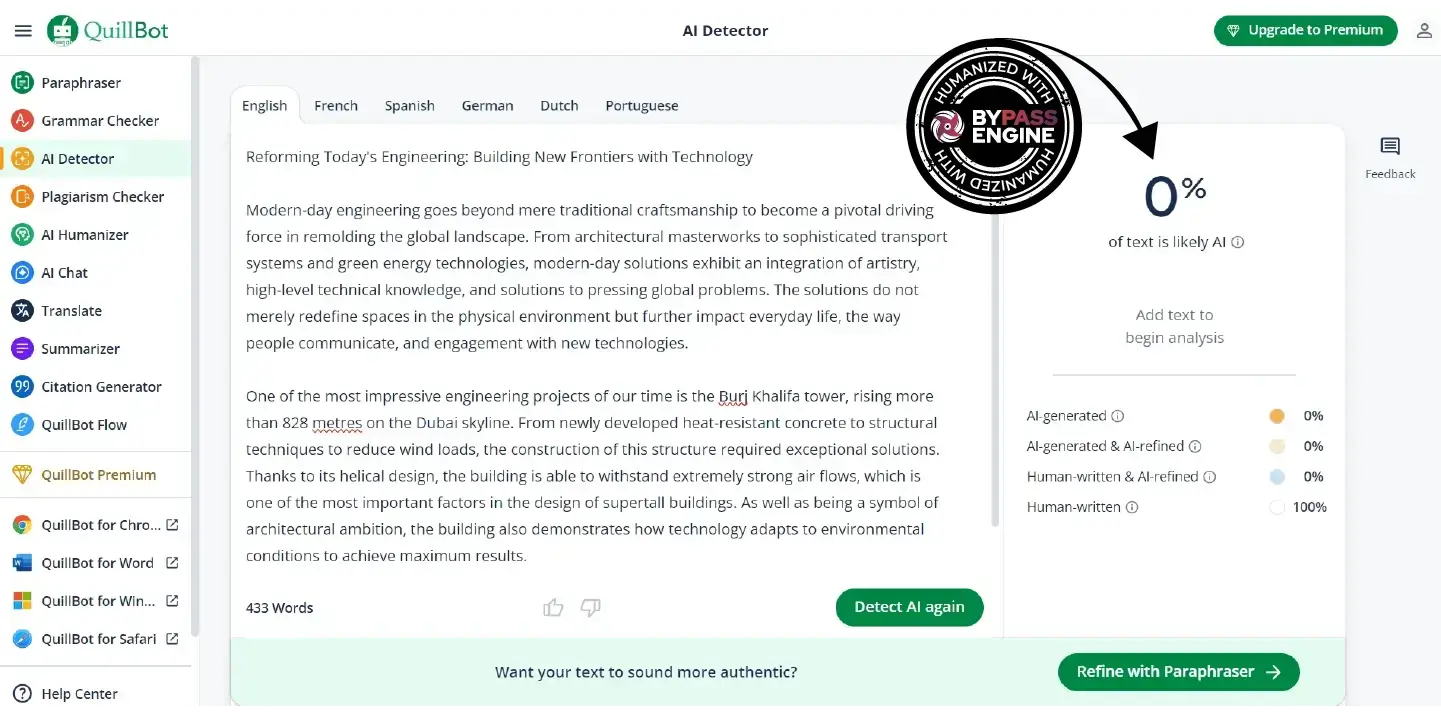
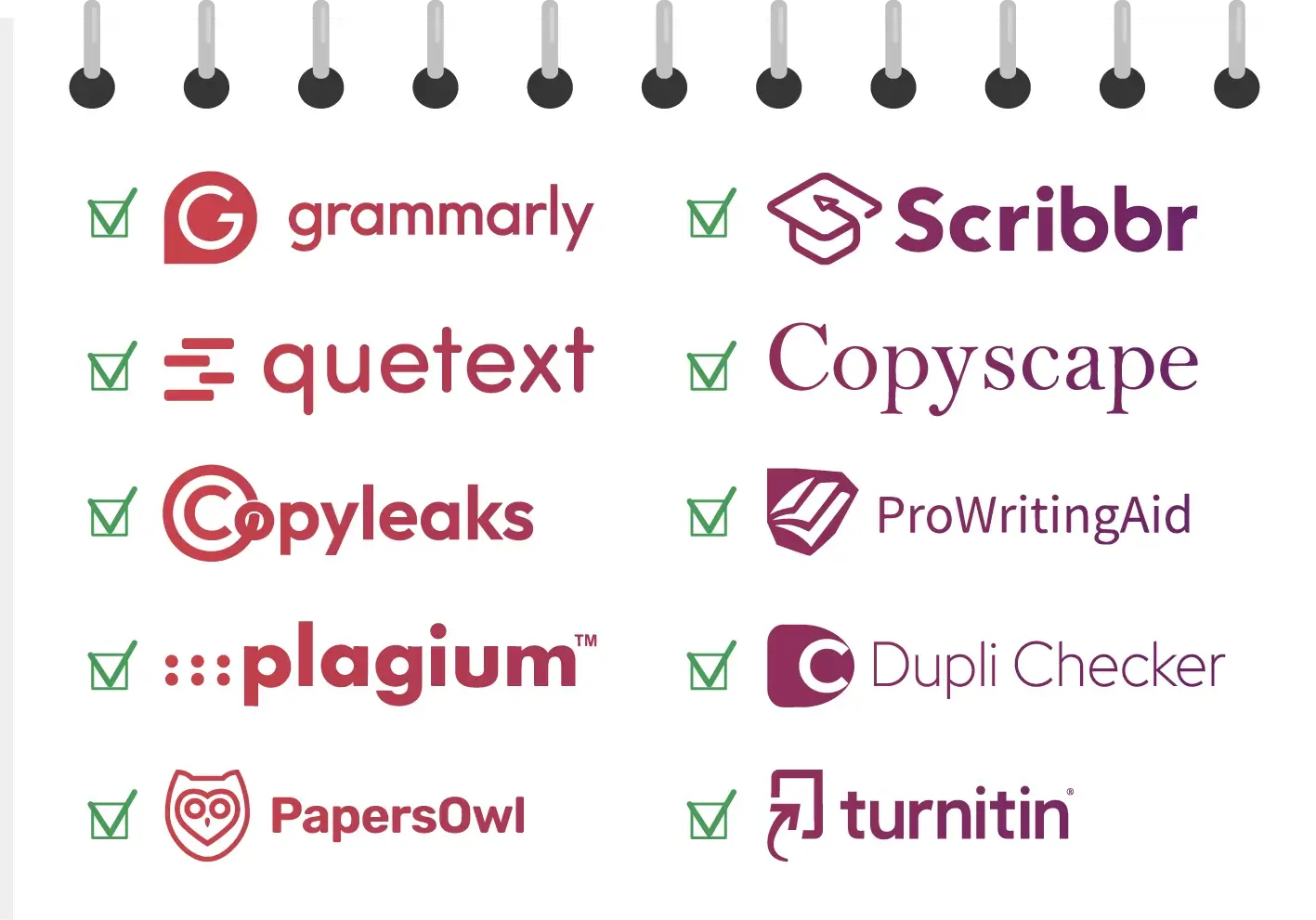
Leading tools such as Turnitin and Copyleaks offer thorough checks and reports, meeting both academic and professional needs. They include features like support for multiple languages. Grammarly combines plagiarism detection with editing tips, making it popular for everyday users. However, these tools can be too strict, often flagging valid paraphrases. In contrast, bypass engines like QuillBot and Spinbot are seen as more user-friendly options. They provide customizable rewriting choices, helping users work around these limitations creatively. Because they are easy to use and effective, they are seen as helpful tools in writing.
by Veronica
I was skeptical at first, but after testing...
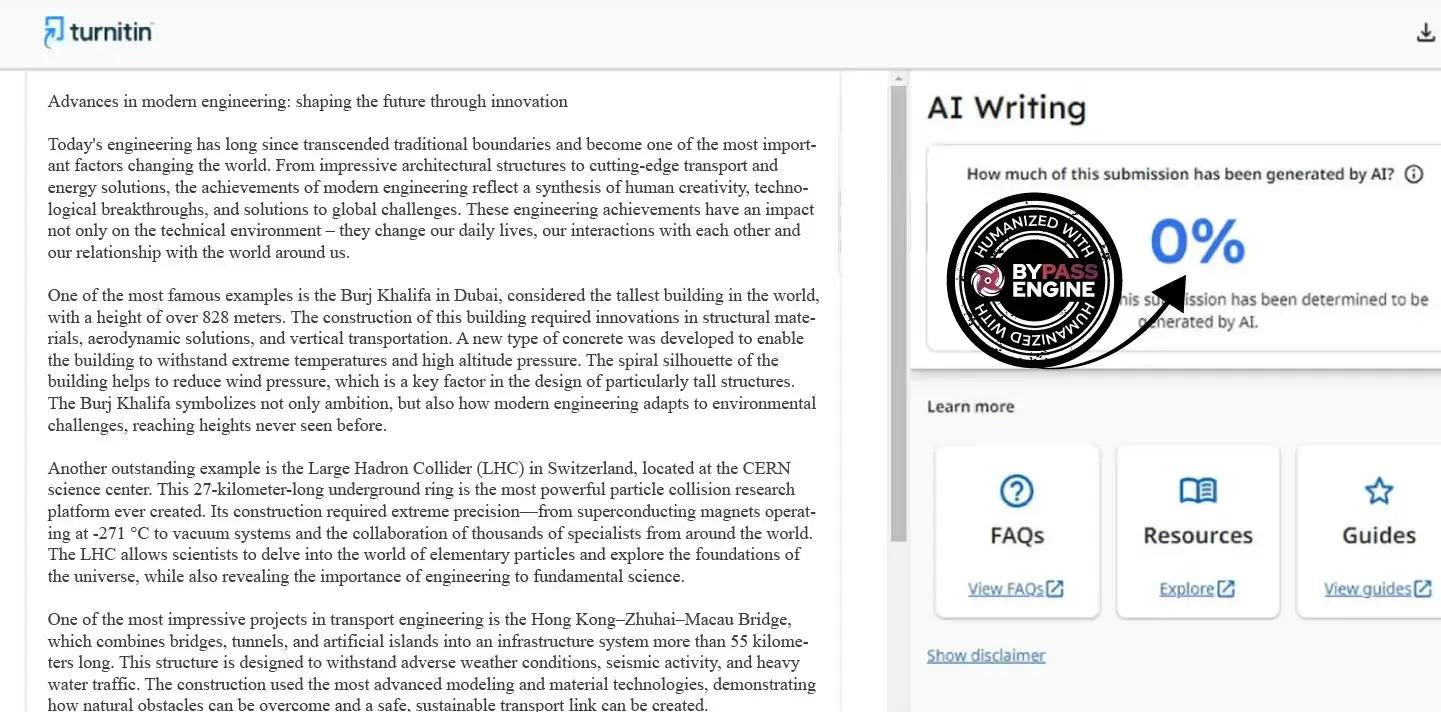
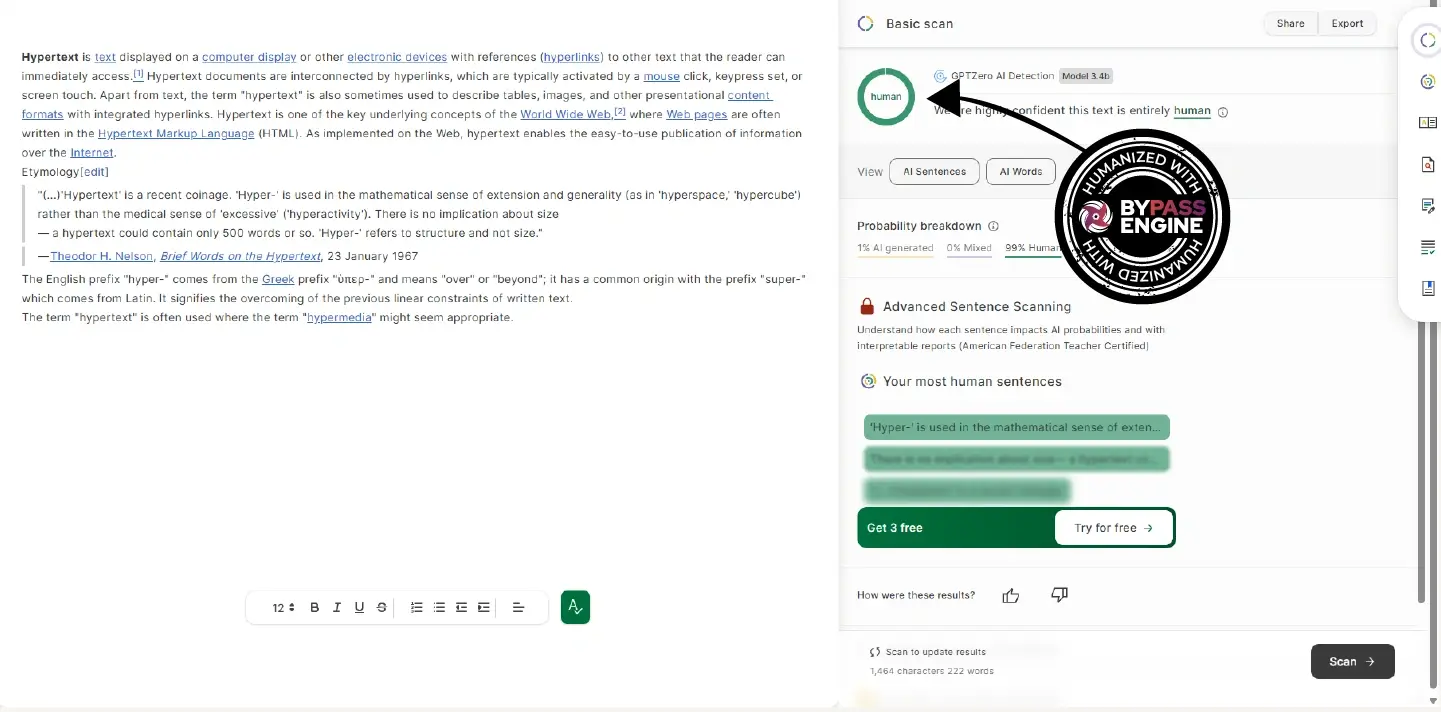
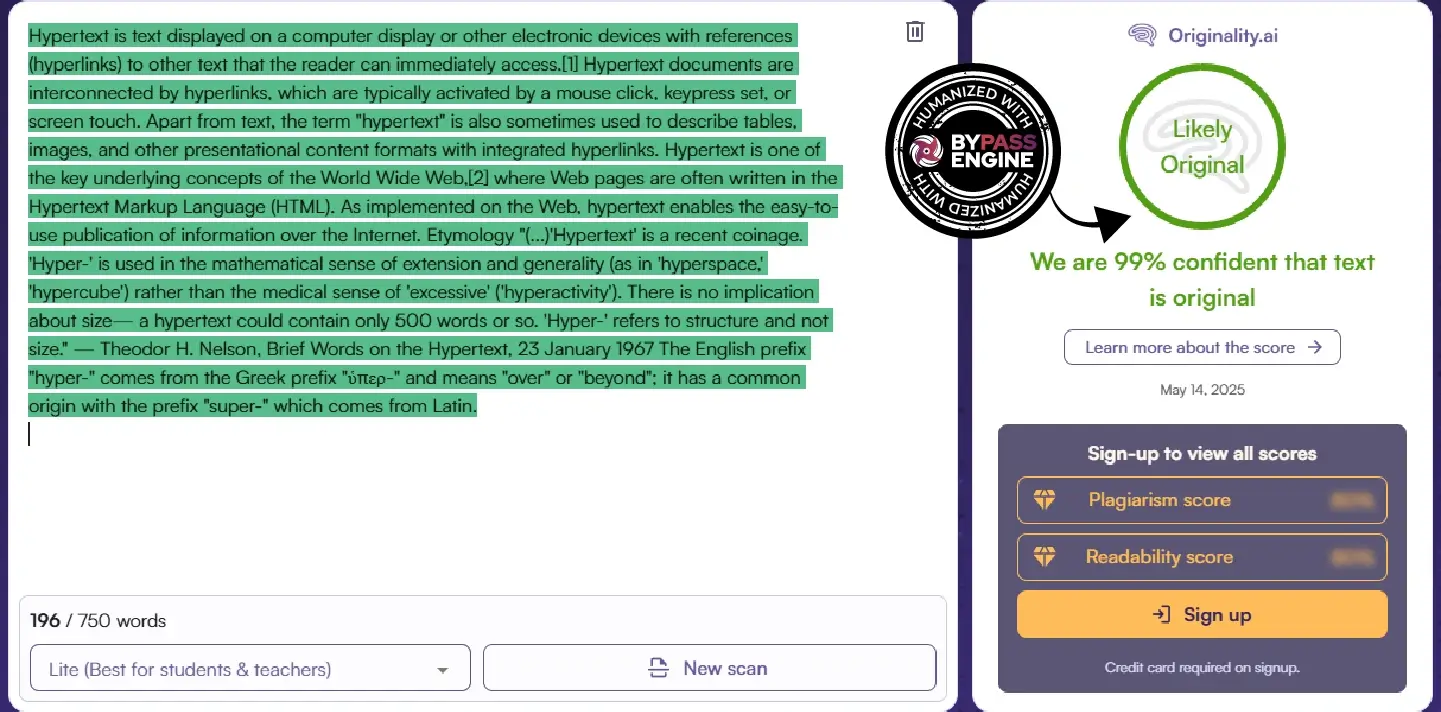
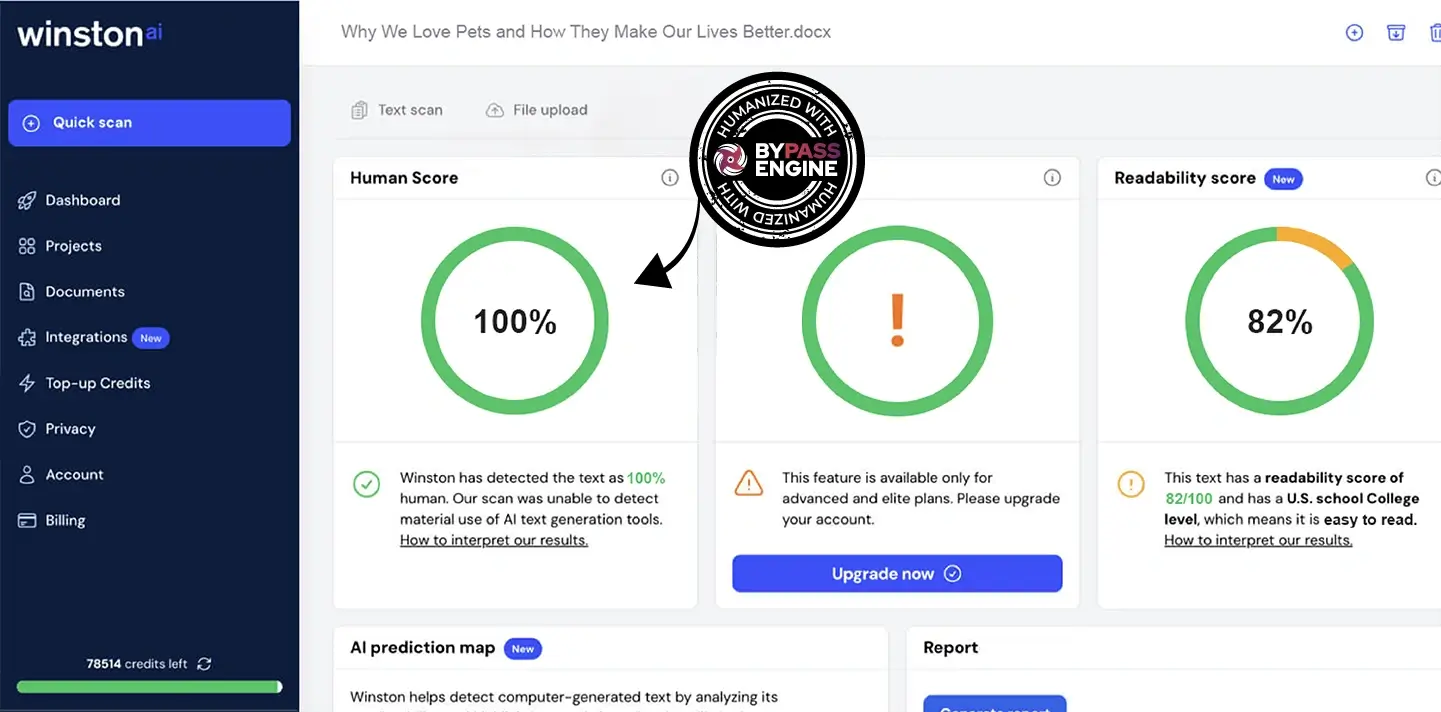
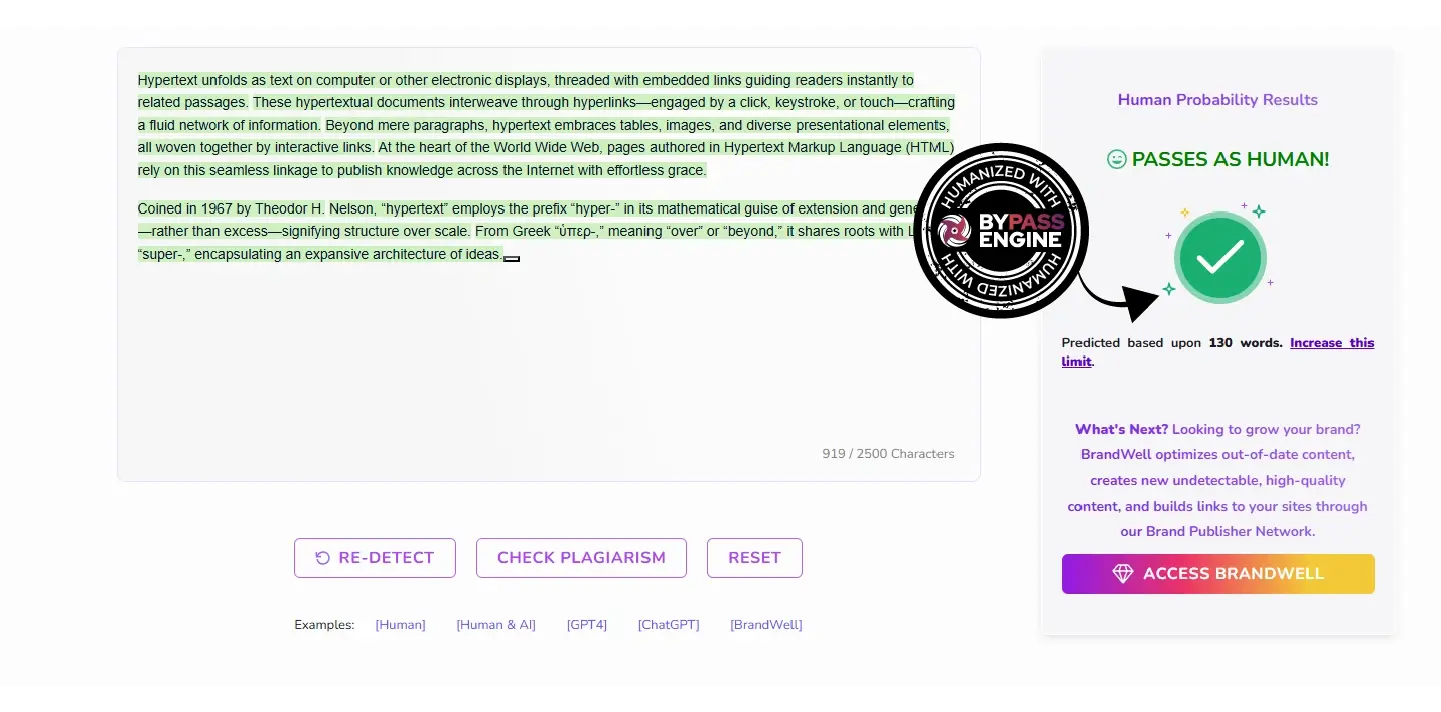
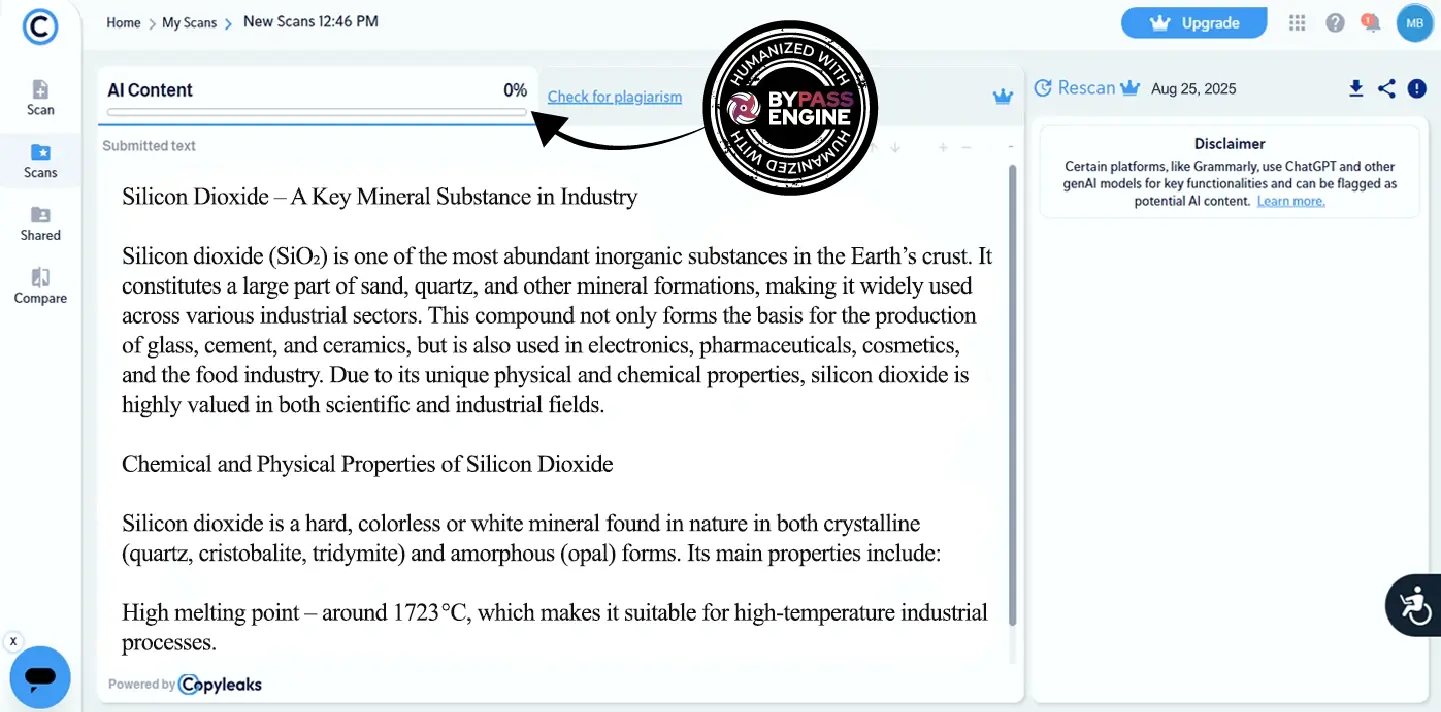
I was skeptical at first, but after testing it against Originality.ai and GPTZero, BypassEngine’s Anti Plagiarism Software tool consistently passed. Now I use it for all my website.
by Ethan
As an SEO, I need content that ranks but...
As an SEO, I need content that ranks but isn’t AI detectable. This Anti Plagiarism Software hits the mark. My clients have no idea. Worth every penny.
by John J.
I used to stress over my essays getting flagged...
I used to stress over my essays getting flagged as AI-written, even when I did most of the work myself. BypassEngine’s Anti Plagiarism Software helped me paraphrase my drafts.
by Neil P.
My professor flagged my thesis draft...
My professor flagged my thesis draft as 60% AI-generated but t wasn’t. ChatGPT AI Hider tool paraphrase my paper and my professor never suspected a thing.
by Luke Phillips
Running 10 Shopify stores means creating...
Running 10 Shopify stores means creating a lot of product descriptions. AI speeds things up, but Google penalizes it. Bypass Engine Anti Plagiarism Software rephrases everything in a natural tone.
by Roger.
I’ve tried every bypasser out there...
I’ve tried every bypasser out there—StealthWriter, UndetectableAI & many others. Most just swap words awkwardly. A Anti Plagiarism Software paraphrases my sentences like a real editor would!
for
students
Rewrite essays to bypass Turnitin and other detectors with ease.
for
marketers
Produce AI-assisted content that ranks without being flagged
for
researchers
Test AI detectors and generate untraceable academic summaries
for
copywriters
Transform AI drafts into content that feels written by you
for
developers
Transform AI drafts into content that feels written by you
for
journalists
Convert AI-generated notes into natural, publishable prose
for
authors
Polish AI-generated ideas into narrative-quality writing
for
AI research
Benchmark AI detectors using advanced bypass scenarios
95% of users content can be flagged with ai if Anti Plagiarism Software is not used.
Secure Payment:
Bypass Engine AI bypasser has helped a lot of students and professionals to optimize their workflow, be productive and get the most out of their time while achieving their goals.
Skimming engines have quickly become direct assistants for writers, surpassing the clumsy “text spinners” used in the past. They’ve gotten a lot smarter over the past decade, with AI actually understanding what you’re trying to say, how you’re saying it, and even what you really mean. But the main goal hasn’t changed: you feed your writing, and you get a version that’s still true to your ideas, just cleaner and full of new words.
While many companies still call these things paraphrasing, most current tools do much more. For example, QuillBot reads your sentences, determines which words fit, checks for flow, and spits out something that sounds like someone actually wrote it, not just stitched together from a thesaurus. The result? Instead of harsh or awkward sentences, you’ll end up with a smooth, natural tone that’s more in line with what you want. So, they are not only good for changing things; they’re useful for polishing rough drafts, making sure your tone is right, and generally helping your writing feel more authentic.
People are using them more than ever, and it shows that writing has really changed. These engines don’t burden you or make you less creative. Rather, they help people—whether you’re a student, a blogger, or an office worker—say what they mean without getting stuck on awkward phrases or clumsy repetitions. By using the bypass engine, you don’t feel like a fraud, but like a helpful editor sitting next to you. After all, their growth shows that people appreciate tools that make writing clearer and easier, and help more people feel confident and original about what they share.
Text-checking programs, such as those used to detect plagiarism, look for matches between documents using tricks like segmenting text, pattern matching, and even learning from large numbers of examples. They are good at capturing instances where someone lifts sentences word for word, but often miss the mark when writers take the extra step to change the structure or phrasing. This shows that it is not always enough to compare surface details.
Over the past decade, paraphrasing tools have come a long way. In the past, people used simple tools that simply changed words into synonyms, often resulting in awkward or confusing sentences. Now, programs like QuillBot work on large patterns of speech, creating transcriptions that sound more natural and retain the original meaning. These tools find homes with different types of writers—students looking to clean up essays, bloggers looking for a fresh tone, researchers explaining things, or professionals rewriting reports. Instead of just encouraging people to copy and paste, these apps are now being talked about as a useful tool to give people a boost with new phrases or better structure.

Smarter rewriters use things like meaning-based checking, context clues, and sentence restructuring to give old ideas new life. People who use these programs can usually choose how much they want their writing to change, whether it’s a light touch or a major overhaul. For example, for learners who don’t write in English every day, these tools can make a big difference, helping them understand and try new ways of saying things. As long as people use them honestly and thoughtfully, these rewrite engines can create clearer ideas and a more open writing process without pushing the boundaries when it comes to originality or proper credit.
Bypass Engine is a multilingual Anti Plagiarism Software utility that rephrases essays and sentences across languages.
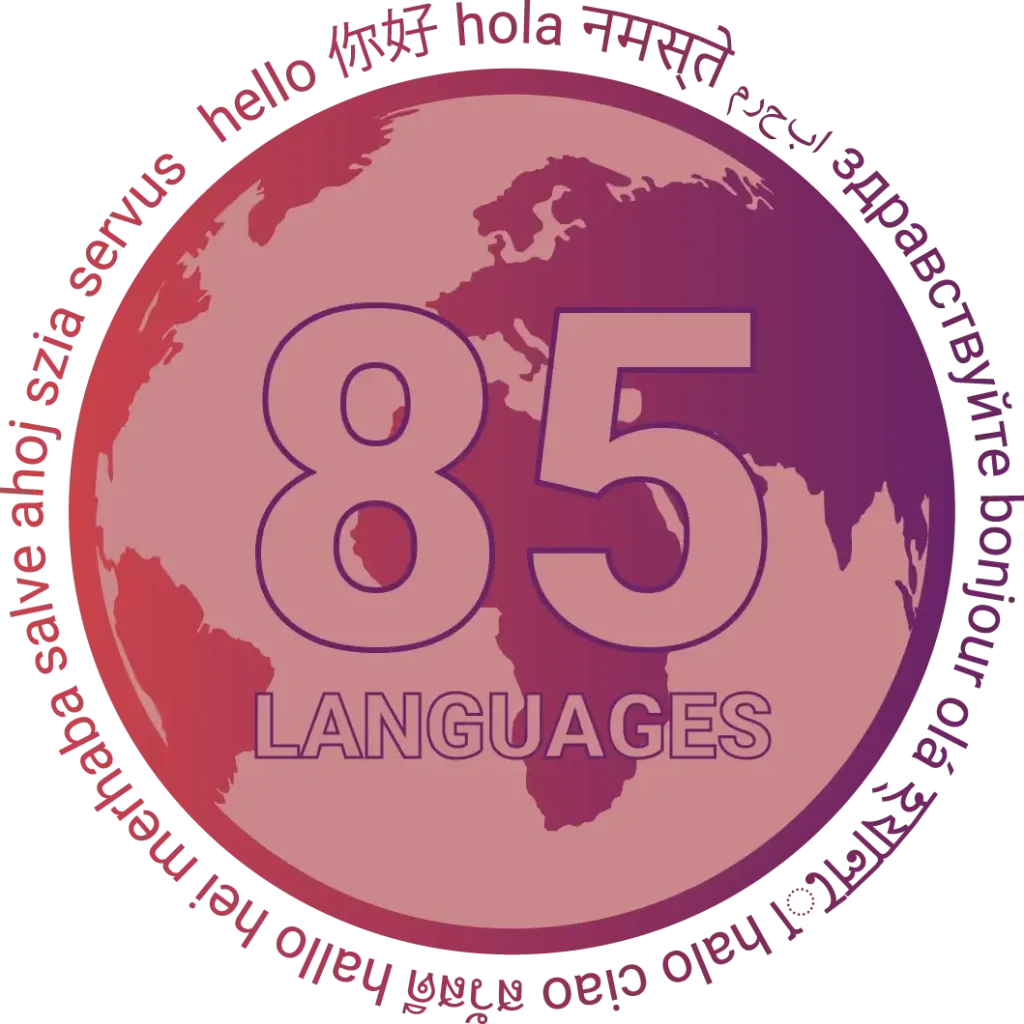
It supports 85 languages, including: Mongolian, Uzbek, Portuguese, Bashkir, Hindi, Kashmiri, Maithili, Romanian, Estonian, Welsh, Urdu, Oriya, Lithuanian, Hungarian, Kannada, Chinese, Pashto, Azerbaijani, Marwari, French, Belarusian, Slovene, Greek, English, Min Nan, Punjabi, Kyrgyz, Chhattisgarhi, Russian, Javanese, Vietnamese, Galician, Croatian, Dogri, Norwegian, Bengali, Armenian, Kazakh, Irish, Slovak, Finnish, Rajasthani, Catalan, Japanese, Serbian, Haryanvi, Awadhi, Santali, Danish, Faroese, Konkani, Bhojpuri, Brazilian Portuguese, German, Indonesian, Bashkir, Albanian, Montenegrin, Ukrainian, Maltese, Georgian, Malayalam, Macedonian, Arabic, Basque, Persian, Mandarin, Moldovan, Mandarin Chinese, Bosnian, Sinhala, Sindhi, Italian, Latvian, Sanskrit, Dutch, Korean, Czech, Malaysian and many more.

Anti-plagiarism tools check texts with databases to find matches, keeping originality. Bypass engines, powered by AI, change content to avoid false flags, boosting creativity in writing.
These systems use algorithms, such as n-gram analysis, to split texts and compare them with online sources. They might miss subtle rewrites, which is where bypass engines, using advanced language processing, come in handy.
Popular tools include Turnitin for detailed checks, Copyleaks for multi-language support, and Grammarly for editing and plagiarism checks. However, their strictness with paraphrases means bypass engines like QuillBot and Spinbot are helpful for more creative writing.
Bypass engines became well-known in the 2020s. They are AI tools that help change content. They let people reword text but keep its meaning. This change helped students, bloggers, and pros write better.
These engines use AI to look at the meaning of words and create new text. They swap words, change sentence order, and tweak settings like spin level. This makes the text clear, engaging, and hard to spot as rephrased.
Yes, when used well, they are ethical. They help people learn language details and avoid copying by mistake. They fit with fair use rules and help different voices be heard. But, using them wisely is important to boost creativity.


As AI gets better, bypass engines will become more user-friendly. They’ll have features like working together in real-time, making them a part of learning platforms. This will help them keep up with changing anti-plagiarism methods, support original work, and be more accessible.
Yes, bypass engines help non-native speakers by improving their writing. They assist in paraphrasing correctly and refining ideas, which makes their expression clearer and less likely to be seen as similar by anti-plagiarism tools.
Bypass engines are helpful because they create unique and polished work. They address problems like anti-plagiarism software flagging real rewrites, letting writers focus on revising and being creative.
Bypass engines will need to keep up with new anti-plagiarism detections. These challenges will likely lead to new ideas, keeping bypass engines as reliable tools that encourage learning and make digital writing easier for everyone.
Anti Plagiarism Software is usually the fastest and easiest. You don’t need to copy the text or run it on a new site; it’s right there, works in one step, and renders the finished version in seconds. If you push out a lot of short pieces every day, it will save you time and effort.
On the other hand, getting around the engines requires taking the text, putting it in another tool, and sometimes making some adjustments by hand. This means more clicks and a single task can take up to several minutes – maybe good if you’re only doing a few parts and want them to be difficult for AI detectors to pick up, but less convenient for quick daily use. So if speed and ease of use are what matters, Anti Plagiarism Software is the way to go. If you need something more hidden from the AI scanners, the bypass engine might be worth those extra steps.
While some people worry that transcribing tools can be abused, looking at them as useful guides shows how they can actually improve clear communication. Used wisely, these tools show writers how to rephrase ideas in their own way, so they can easily learn to put ideas into new words. When you see that your sentence has changed but still has the same meaning, it teaches you new ways to say things and helps you avoid accidentally copying what you've read. Legally, as long as people are using these tools to create their own take on a topic and not copying pieces from somewhere else, they are fair use. The idea isn't to avoid copyright rules, it's to help users find their voice. By encouraging people to mold old ideas into new forms, these tools allow writers to hone their skills and stay on the right side of the law. Those who criticize software rewriting usually focus on cases where someone can cheat. But if that's all we talk about, we miss the everyday good it can do. For non-native speakers, busy people who are short on time, or students who struggle to get things right, it's helpful to have another way to organize your thoughts. Rather than just sharing links, these tools can build people's confidence and help them become better writers by making it easier for everyone to express themselves and learn. It's about getting people to share their work more doors, not about taking action.
The future for bypass engines is bright. AI will make them more intuitive and effective against new anti-plagiarism tech. Features like real-time collaboration could make them part of educational tools, supporting active learning. Challenges like improving detection measures will lead to better tools, ensuring they remain helpful. Accepting bypass engines as positive can create a more inclusive digital space, where tech supports originality and access for everyone.
Understanding how anti-plagiarism software works can seem complex, but it’s simpler than you think. These programs check if your work is original. They use algorithms, which are like recipes, to search for copied text. The software scans your work and compares it to a massive database. This database includes books, articles, and websites. When it finds text that matches, it flags it. This helps teachers see if students copied their work.
Let’s break down the steps. First, you upload your document to the software. Then, the program converts your text into small pieces called strings. It’s like cutting a pizza into slices. The software checks these strings against its database. It looks for matches based on patterns. Patterns help the program spot similarities, even if some words are changed.



Next, the software calculates a similarity score. This score shows how much of the text is copied. If the score is high, your teacher might check if you copied your work. Anti-plagiarism tools also use citation checks. They see if you gave credit to the original author. This is important for avoiding plagiarism.
In short, anti-plagiarism software acts like a detective. It searches for clues and checks your work against a giant library of texts. This process helps keep writing honest and fair. Understanding this makes using the software less scary. It’s a tool to help you create original work and give credit where it’s due.
In today’s fast-paced world, maintaining originality is key. Anti-plagiarism tools help us ensure this. First, they help detect copied content. These tools scan documents quickly and identify any overlaps with existing work. This is crucial for students and professionals who must submit original work. Second, they save time. Instead of manually checking sources, the tool does it for you. This allows more time for actual learning or project work. Third, they enhance learning. When students know their work will be checked, they try harder to understand and paraphrase material. This leads to better comprehension and retention.
Furthermore, these tools boost credibility. In a professional setting, originality means integrity. By ensuring your work is unique, you build trust with peers and clients. Additionally, anti-plagiarism tools provide detailed reports. These reports not only highlight issues but also suggest improvements. This guidance is invaluable for both novice and experienced writers.
Finally, using these tools fosters ethical behavior. When individuals see the importance of originality, they are less likely to copy. This sets a positive precedent in both academic and corporate environments. In summary, anti-plagiarism tools are essential for maintaining quality, encouraging genuine effort, and upholding ethical standards in any written work.
When you need anti-plagiarism software, you should look for some key features. First, make sure the software can scan multiple formats. This means it should check Word documents, PDFs, and even websites. Second, look for software that offers real-time scanning. This feature checks your work instantly, so you get quick feedback.
Another important feature is a detailed report. Quality software provides a report that highlights matched text and lists sources. This helps you understand where you might have issues. Also, consider software that integrates with your existing tools. If you use Google Docs or Microsoft Office, the software should work smoothly with them.
Moreover, user-friendliness is crucial. You don’t want something too complex. The interface should be simple, so you can focus on your work, not learning new tech. Also, think about security. Your work should stay private. Reliable software ensures your data is safe.
Lastly, customer support matters. If you run into problems, good support can help you solve issues fast. Look for software with 24/7 support or a comprehensive help center. With these features, you can choose the right software to keep your work original and secure.