
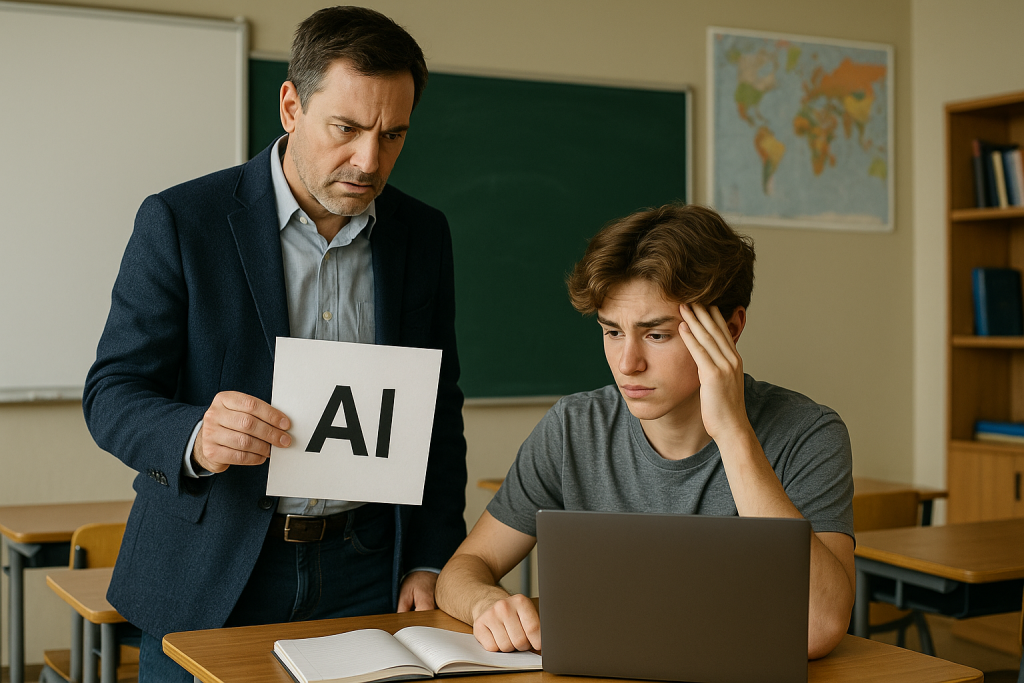
Tools like ChatGPT have changed how students write essays. They help with ideas, organizing, and grammar checks. But, they also bring up worries about originality and honesty. Schools use AI detectors to see if work is by a person or a machine. These tools have their own challenges, like ethics and tech issues. Using AI detectors in schools is a new step in keeping academic honesty. It tries to mix new tech with being responsible.
What Are AI Detectors for Essays?
AI detectors check essays to see if AI wrote them. They look for signs like simple language, even sentence length, and little variation. Schools use these tools for grading papers, exams, and applications. Common tools are GPTZero, Copyleaks, Turnitin, and Originality.ai. They help keep grading fair by ensuring students’ work is their own.
How AI Detectors for Essays Work
AI detectors use natural language processing (NLP), stylometry, and machine learning. NLP breaks down language patterns and checks syntax. It compares text features with known AI-generated content. Stylometry looks at writing style to tell if a human or machine wrote it. Two key metrics are perplexity and burstiness. Perplexity checks how predictable a word in a sentence is; lower values can mean AI was involved. Burstiness looks at sentence variation; AI often makes uniform sentences, while humans vary more. These models learn from big datasets of human and AI writing to judge new texts.
Why Schools Use AI Detectors
Schools use AI detectors to keep things honest. With many easy AI tools around, it’s tough to tell if a student did the work alone or with AI help. These detectors stop cheating and make sure grading is fair. They also help teachers trust their grading, especially when classes are online. Plus, detectors teach students to think about how they write and see why real work matters.
Popular AI Detection Tools in Academia
Many tools lead the way in spotting AI in schools. GPTZero points out likely AI parts and explains them. Originality.ai scores and tracks drafts over time. Turnitin, known for catching copied work, now also finds AI writing. Copyleaks checks many languages and scans fast, good for schools worldwide. These tools vary in cost, accuracy, and reports, but all help teachers spot AI writing while keeping user info safe.
Case Study: Implementation in High School Essays
In 2024, a big school district in the U.S. used GPTZero to check high school essays. Teachers worried students used AI too much for homework. The tool found clear AI use but also wrongly flagged some good writers. The district then made all flagged work get a human check and ran student workshops on using AI right. Teachers liked it, but students worried about unfair blame. This shows the need for fair, clear use of such tools.
Benefits of AI Detectors in Education
AI detectors, when used right, offer many perks. They keep students honest by stopping them from turning in AI-made work. Teachers can ensure fairness, which is key in tough school settings. Plus, these tools teach by showing writing styles and helping students learn what real work looks like. Teachers can spot who needs help with writing through detector results. By showing the gap between AI and human writing, teachers help students grasp writing better.
Risks and Limitations of AI Detectors for Essays
AI detectors have limits. They can wrongly tag human work as AI-made. This mistake can hurt students with unfair penalties and stress. Students who speak English as a second language or those with learning differences might write differently than what detectors expect. This can cause more errors. Also, detectors rely on old data, while AI changes fast. This means detectors might miss new AI tricks. Teachers should be careful and not depend too much on these tools.
How Teachers Can Use AI Detectors Responsibly
Teachers should use AI detectors with other evaluation methods, not alone. They need to check flagged work by hand and think about a student’s past writing. It’s important for teachers to explain how these tools work and their limits. Setting clear rules for AI use in class helps avoid confusion. Training sessions can help teachers understand detection results and talk to students about tech and ethics.
How Students Can Avoid Detection Mistakes
Students can take steps to show their work is human-written. First, they should not depend too much on AI for ideas. If they use AI, they must rewrite in their own style. Adding personal stories and feelings can make their writing unique. Using different sentence lengths and creative tools like metaphors can help too. Knowing how AI detection works helps students make real content while using tech wisely.
Impact on Writing Style and Student Creativity
AI detectors are making students change how they write. They’re afraid that formal writing might set off alarms. So, they use simpler words to stay unnoticed. This limits creativity and stops them from trying new things, which are key in learning. Teachers should tell students that good writing won’t get them in trouble. It’s important to develop their own style, not just write to please algorithms. Balancing this means AI checks won’t limit how freely they express themselves.
Institutions Creating Guidelines for AI Use
Schools and universities are making rules for AI use. These rules include honesty codes about AI tools and require students to say how much they use AI. Some policies let students use AI a little, but they must be clear about it. These rules help students learn right from wrong while using new technology. They also help teachers apply the rules fairly. As AI becomes more common in schools, these rules will keep trust and responsibility strong.
AI Detectors vs Human Evaluation
AI tools work fast, but teachers are key in grading. They understand context and emotions, which machines can’t fully do. AI might miss jokes or cultural points, but people catch them. Using both AI and humans gives the best results. This way, real creativity and tricks don’t go unnoticed. Together, tech and people make fair and smart decisions.
Future of AI Detectors in Education
AI detectors are getting better. They might soon work in real-time with learning systems, giving personal feedback. Future detectors could understand context, track sources, and see how students grow. Some tools might spot reworded AI text and keep up with new language models. As tech gets better, it could switch from punishing to helping students write better. The aim is to help students improve, not just catch mistakes.
Conclusion: Navigating the Role of AI Detectors in Academia
AI detectors change how schools check essays. When used well, they keep things fair and help students learn. But, they need to be used with care and fairness. Teachers, schools, and students must work together to make sure these tools help education. The key is to use tech wisely and keep human values in learning.
FAQs
- What is an AI detector for essays? It’s a software tool that evaluates whether a piece of text is likely written by a human or generated by AI.
- Are AI detectors always accurate?
They might give wrong results, so use them with human judgment.
- Can students use AI ethically in education?
Yes, use it for help or ideas, not for replacing your work.
- Do AI detectors affect student creativity?
Too much focus on detection scores can limit creative writing.
- Will AI detectors become more accurate?
Yes, with AI models that understand context and explain themselves, learning platforms are improving.