
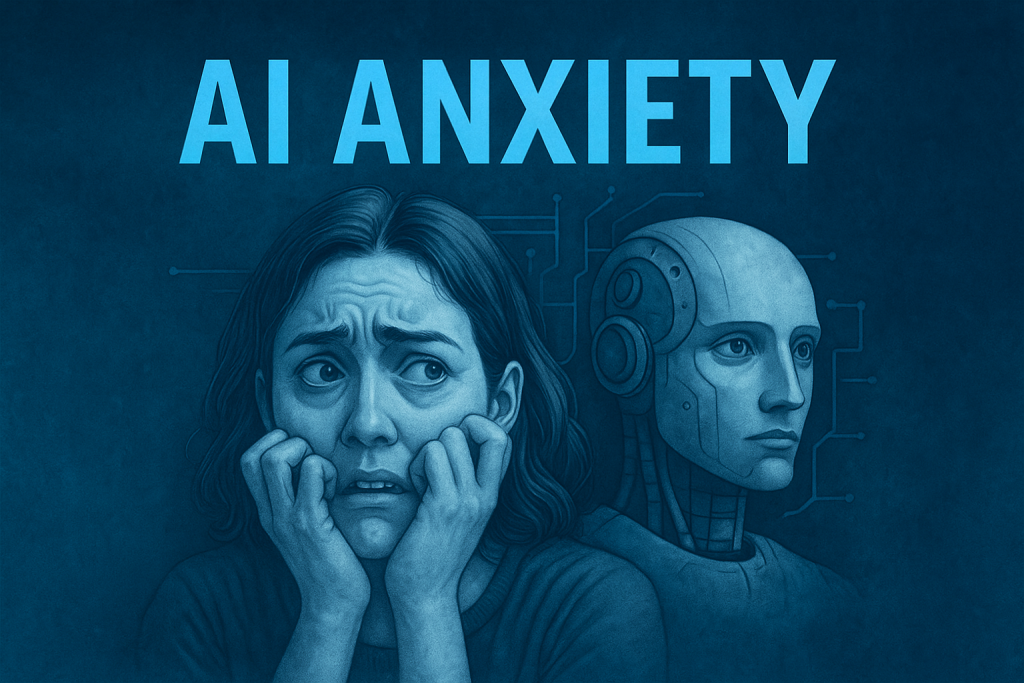
As AI grows fast, people feel a new worry: AI Anxiety. This means feeling uneasy, scared, or stressed about AI’s role in life, work, and the world. Some fear losing jobs to machines, worry about fair AI choices, or dread robots getting “too smart.” AI Anxiety is common, but not well-known. Here, we’ll look at what causes AI Anxiety, how it shows up, and how people and groups can handle it well.
The Roots of AI Anxiety
People feel worried about AI for different reasons, some logical and some emotional. At the heart of it, this worry comes from not knowing what will happen and feeling like they can’t control things. Lots of folks are scared that machines might take over their jobs, and others feel stressed by how fast technology is changing. The news often makes these fears worse with big stories about super smart AI or dangerous robots. Even more everyday worries, like how AI affects privacy, watching people, and taking jobs, can make people uneasy. For many, it’s about a bigger fear: that we’re making something we can’t fully understand or manage.
AI Anxiety in the Workplace
People often feel anxious about AI because they’re afraid of losing their jobs to automation. This fear spans many fields, like manufacturing, logistics, customer service, journalism, and healthcare. Workers worry that their abilities might no longer be needed. The introduction of AI tools such as ChatGPT, DALL·E, and Midjourney has made this concern even bigger, as now even creative jobs seem at risk. When bosses bring in AI systems without explaining them well, it makes workers more anxious. It’s important to have open talks about how AI will be used, provide retraining options, and make sure AI is used ethically, to help ease these worries at work.
Psychological Effects of AI Anxiety
People who have a lot of AI Anxiety might feel stressed, have trouble sleeping, or feel like they can’t do anything about the future. Some say they feel like they’re falling behind in a world run by AI, unable to keep up with new tech changes. In serious cases, it can mix with technophobia (a fear of tech) and make people avoid using new tools or going online. Mental health experts are starting to see AI Anxiety as part of today’s stress that needs real attention.
AI Anxiety in Education
Both students and teachers are dealing with AI’s impact on learning. Tools like ChatGPT bring excitement but also confusion. AI helps with personalized learning, answers, and grading. Yet, it causes worries about cheating, laziness, and fairness. Teachers worry about spotting AI-created work and changing lessons. Students feel unsure about using these tools ethically. Schools need to offer guidance and teach digital skills to ease worries and promote responsible AI use.
AI Anxiety and Ethics
A big reason people worry about AI is not knowing what’s right or wrong. Who takes the blame if an AI messes up? What if a program unfairly picks job candidates? Or if a driverless car crashes? These questions make things tricky and add to the worry about AI among users and leaders. People want to have faith in AI but aren’t sure how it works or if it’s safe to trust. For AI to cause less worry, it needs to be made ethically, be clear about how it works, and have strong rules to make sure it matches what people care about.
AI Anxiety and Surveillance
AI use in surveillance and facial recognition stirs public worry. Many feel uneasy about being watched by smart systems that can spot faces, follow actions, or read emotions without permission. Some say these tools boost safety and efficiency, but others find them invasive and dystopian. This worry is worse in places with lots of surveillance, where people feel powerless to challenge or question the tech surrounding them.
AI Anxiety and Creativity
In the world of creativity, artists, writers, musicians, and filmmakers face a unique worry called AI Anxiety. Now, generative AI can create paintings, poems, music, and videos that look real. Some creators welcome these tools as partners, but others feel uneasy. Will AI make human creativity less valuable? Can true originality last when content is made by algorithms? These questions cause deep worry for those who view creativity as more than just a job—it’s who they are. Finding a balance between new tech and respecting human art is crucial to calming these concerns in the creative field.
AI Anxiety and Trust
Winning over AI skepticism means building trust. People want to know AI is right, just, and matches their values. But it’s tough when AI feels like a “black box”—a complicated thing that’s hard to understand. To fix this, companies need to focus on making AI clear, giving users control, and being honest about ethics. This will ease worries and help people accept AI for the long haul.
Media’s Role in Shaping AI Anxiety
The media has two jobs when it comes to AI Anxiety. First, it helps people learn about how AI can be good or bad. But, it also makes people more scared by telling stories that seem like they’re from a scary future or movies. Shows like Black Mirror and movies like Ex Machina are fun to watch, but they make people think that technology is bad. It’s important to have fair news and media understanding so people can have a clear view.
Generational Differences in AI Anxiety
AI worries differ by age and experience. Young people, familiar with tech, often adjust to AI faster. Yet, even they worry about AI’s rapid growth. Older folks might feel left out, especially if they’re not tech-savvy. To ease AI concerns, we need clear communication, training, and designs that everyone can use.
Addressing AI Anxiety Through Education and Literacy
To ease worries about AI, learning is key. Programs that teach about AI can show how it works, what it can and cannot do, and how to use it wisely. Schools, offices, and public places should give workshops and resources on using AI safely and fairly. As people’s understanding grows, their fear of AI shrinks. Knowing more turns fear into confidence and changes doubt into informed use.
Workplace Strategies to Reduce AI Anxiety
When companies start using AI, they need clear plans to help workers adapt. This means talking openly about how AI will be used, offering training, and focusing on designs that put people first. If bosses ignore worries about AI, they might upset their staff and cause low morale. But, if they listen and deal with these fears, things often go more smoothly and trust grows. Concerns about AI can actually help a company grow, especially if handled with care and learning.
Government and Regulatory Approaches to AI Anxiety
Governments globally are starting to address worries about AI. Laws like the EU AI Act aim to make sure AI is used ethically and openly. These actions help calm public fears by showing that protections exist. But, laws need to change fast and stay flexible with new tech. Getting the public involved in making decisions can also ease fears by letting people help decide AI’s future.
Therapy and Mental Health Support for AI Anxiety
As AI spreads, mental health experts are seeing more cases where tech affects anxiety, stress, or depression. Some therapists now address AI Anxiety, aiding clients in facing fears and finding ways to cope. Techniques like CBT, mindfulness, and guided learning are often used. Talking openly about AI-related stress can make it feel normal and encourage healthier tech use.
AI Anxiety in Popular Culture and Art
More and more, artists are diving into AI Anxiety. They use their work, like books, movies, pictures, and songs, to talk about fears around artificial intelligence. These pieces don’t just show worry; they help people understand it. Art acts like a mirror, showing how people feel and opening up conversations. Looking at and thinking about art that deals with AI Anxiety can help us feel better and learn more. It lets us face our fears with stories and creativity.
Conclusion: Toward a Healthier Relationship with AI
It’s normal to feel anxious about AI as it rapidly changes our world. But we shouldn’t let fear hold us back. By being open, learning, setting rules, and showing understanding, we can change AI Anxiety into awareness, and later, into empowerment. The future of AI isn’t just made by code; it’s also about the decisions we make as people and groups. By confronting our fears about AI, we can create a future where people and machines work together, not in fear, but with cooperation and respect.
FAQs
1. What is AI Anxiety?
People get worried or stressed when they see artificial intelligence becoming more important in their everyday lives.
2. Who is most affected by AI Anxiety?
People can feel anxious about AI, especially workers worried about automation, teachers, artists, and those who don’t know much about new tech.
3. How can AI Anxiety be reduced?
Teaching people, talking openly, learning about technology, and using AI responsibly can help ease worries about AI.
4. Is AI Anxiety recognized by mental health professionals?
Many therapists recognize that AI Anxiety is a type of tech-related stress. They handle it using typical mental health treatments.
5. Can AI Anxiety be a positive force?
When handled well, worries about AI can spark key talks about ethics, responsibility, and where technology is headed.