
Upholding honesty, ethics, and diligence in schoolwork is what academic integrity is all about. It ensures readers can trust that you report findings truthfully and don’t claim others’ work as your own.
When someone commits academic dishonesty, they’re breaking that trust. This can include plagiarism, which ranges from buying essays to small citation mistakes. Such actions are usually easy to spot with a plagiarism tool.
In research and publishing fields, maintaining integrity is crucial too. Misconduct accusations here can lead to serious legal troubles and damage reputations.
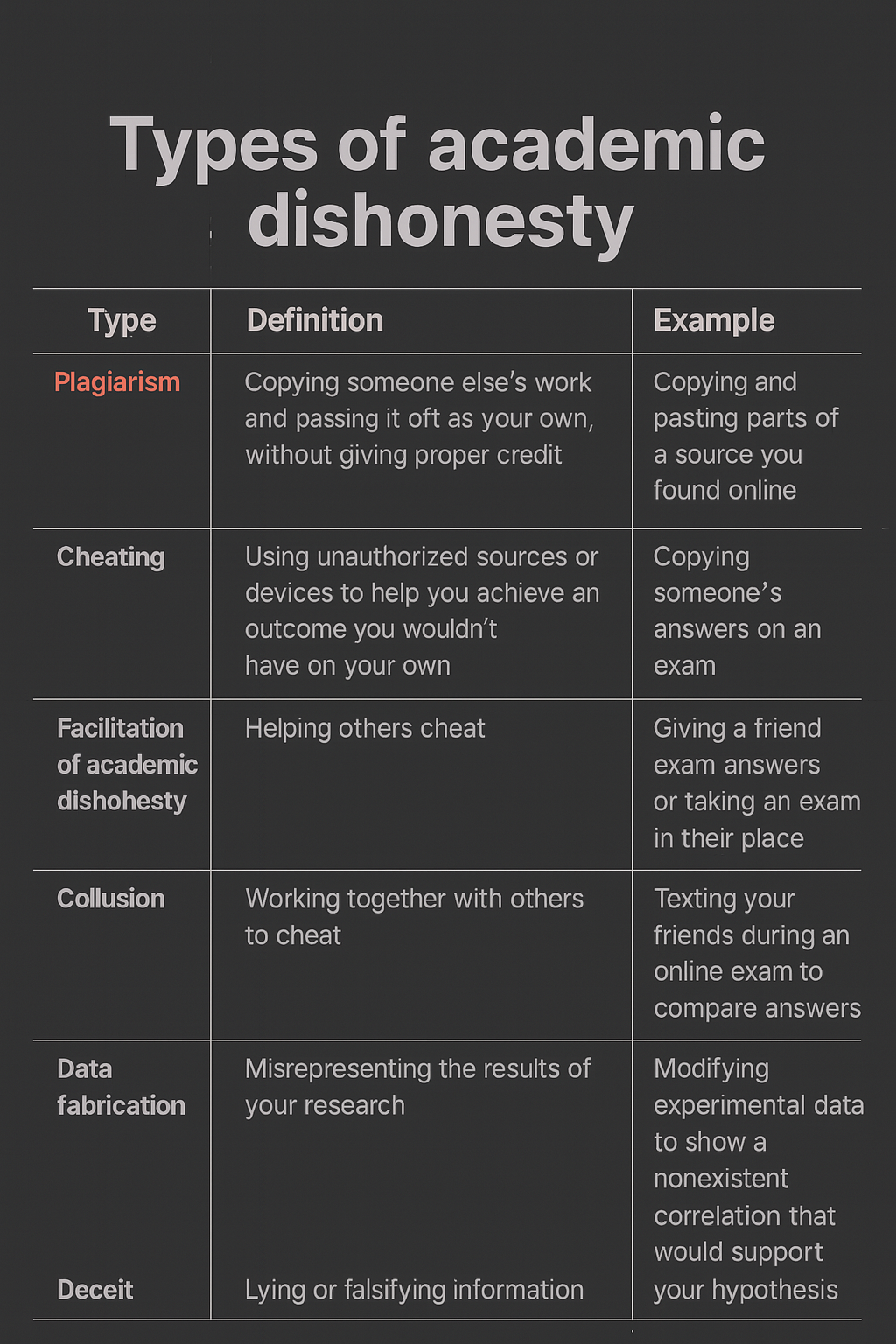
Types of academic dishonesty
Academic dishonesty isn’t just about plagiarism. It can take many forms, ranging from pretending to be sick to purchasing an essay.
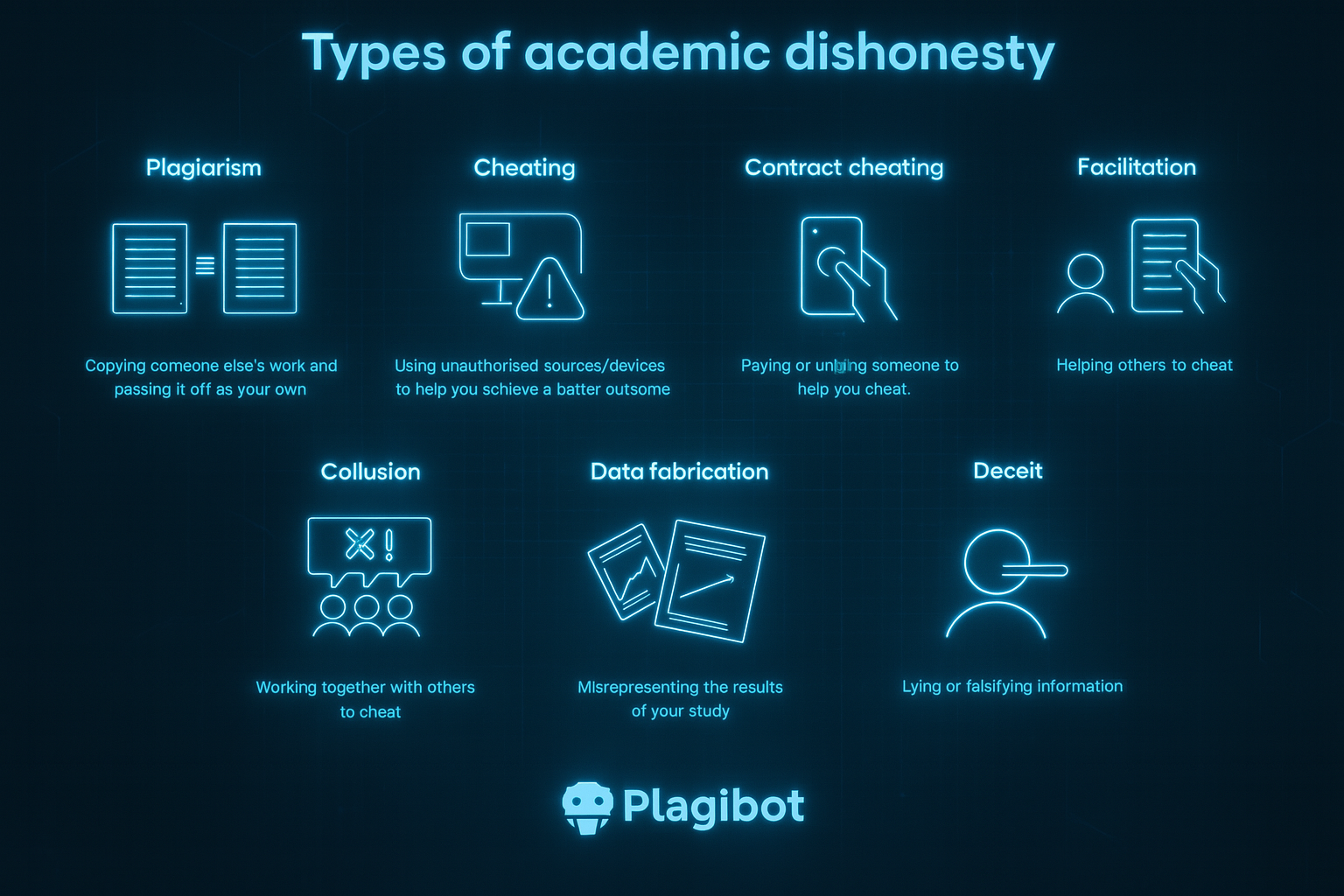
Common types of academic dishonesty
Why does academic integrity matter?
Most students understand that academic honesty matters, yet cheating is widespread.
You might feel pressured to cheat for different reasons: wanting high grades, poor time management, or finding a class hard. However, cheating harms you, others, and how everyone learns. It’s:
- It’s not right for the author who got copied.
- It’s not fair to students who played by the rules.
- Hurting your own learning
- Publishing research with misleading information can be harmful.
- If you don’t grasp the basics well, things can get risky in certain situations, like when working in a lab.
The results of your actions can vary based on how serious the offense is and the rules at your school. You might just get a warning if it’s your first time, but it could also lead to failing a class or even being expelled from the university.
Examples of academic dishonesty
Mild academic dishonesty
- Pretending to be sick to avoid going to class
- Requesting notes from a special review session you missed, organized by your professor, from a classmate.
- Working with others or pooling ideas on a homework task.
- Quoting a source in a paper without actually reading it
Moderate academic dishonesty
- Cheating during pop quiz
- Looking at your notes during a take-home test meant to be done without any books.
- Turning in a paper again that you used for another class (reusing your own work)
- Creating a fake doctor’s note to extend a deadline for an assignment.
Severe academic dishonesty:
- Creating fake data or results to support your theory in a lab setting.
- Purchasing an essay that’s already written or solutions for a test online
- Creating a fake family crisis to avoid a final exam
- Completing an exam on behalf of a friend
Frequently asked questions about plagiarism
What is academic integrity?
Academic integrity is about being honest and ethical in your schoolwork. To keep this integrity, don’t mislead readers about your research. Avoid cheating offenses like plagiarism or having someone else do your work. These are examples of academic misconduct.
What is academic dishonesty?
Cheating in school means acting dishonestly or deceitfully in a learning environment. People might do it on purpose or by mistake, and it can be more or less serious.
This includes buying an essay someone else wrote, cheating on tests, or copying someone else’s work without permission. It also covers helping others cheat, using a friend’s homework answers, or faking illness to skip a test.
Cheating isn’t just limited to classrooms; it can also happen in research and other areas related to academics.
What are the consequences of academic dishonesty?
The outcomes of cheating in school vary based on how serious the offense is and what your school’s rules are. Punishments might start with a warning for a first mistake, move to failing a class, or even lead to getting kicked out of college.
In specific careers like nursing, engineering, or science labs, skipping the basics can put people’s health and safety at risk. For those in teaching or research, cheating can hurt your career, making people question your later work.
What are examples of academic dishonesty?
Cheating in school can be done on purpose or by accident. It might be as easy as saying you read a book when you didn’t, or looking at a classmate’s exam answers.
Sometimes, you might cheat because you want to help a buddy with their homework. Serious cheating includes buying an essay online, getting test answers, or pretending to be sick to skip a big test.
What happens if you plagiarize?
Plagiarism can lead to different outcomes, depending on its nature and setting. Copying an entire paper has the harshest penalties, but small citation mistakes are seen as less serious.
For students, it might mean failing a class, getting suspended, or even expelled. You might have to attend a plagiarism workshop. The consequences depend on whether it’s your first time or a repeat offense.
For academics or professionals, plagiarism can ruin your reputation. You could lose funding or your job and might even face legal trouble for breaking copyright laws.